


Cape Town ratepayers are again questioning how the City calculates fixed water and sanitation charges.
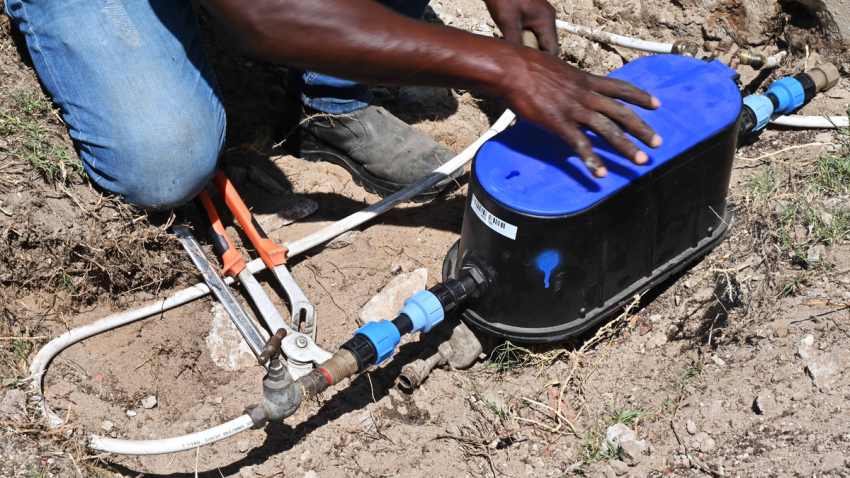
The latest dispute centres on the decision to base fixed sanitation fees on the size of a property’s water meter.
Civic group STOP CoCT argues that larger meters may justify higher water charges because they can deliver more water at faster rates.
However, founder Sandra Dickson said the same reasoning does not automatically apply to sanitation.
She said sewage leaves a property through a separate connection and that sanitation costs depend on wastewater volumes, user numbers, sewer capacity and the type of effluent.
Watchdog questions steep differences
Dickson said properties with larger water meters face significantly higher fixed sanitation charges.
According to her, a property with a 25mm meter pays almost 2.8 times the fixed sanitation charge of one with a 22mm meter.
A 40mm meter attracts more than seven times the charge.
She questioned whether any engineering or cost study showed that these properties created proportionately higher sanitation costs.
“The City must explain the direct and proportionate link between the size of a drinking-water meter and the actual fixed cost of removing sewage from that property,” Dickson said.
City defends tariff system
Finance Mayoral Committee member Siseko Mbandezi said the approved tariff combines fixed and usage-based charges.
He said the fixed portion helps recover the cost of providing and maintaining infrastructure, regardless of how much water a property uses.
Mbandezi said about 90% of the City’s water and sanitation costs are fixed, while only 10% are variable.
However, the City currently recovers about 17% through fixed charges and 83% through usage charges to balance affordability, fairness and cost recovery.
He said meter size is a practical engineering measure of the infrastructure capacity reserved for a property.
Court ruling forced amendments
For residential properties, the City calculates the usage-based sanitation charge using 70% of measured water consumption.
The fixed charge applies even when little wastewater is discharged because infrastructure remains available to the property.
The City recently proposed returning fixed water and sanitation charges to a meter-size system following a Western Cape High Court ruling.
The South African Property Owners Association and AfriForum successfully challenged the City’s property-value-based charges.
In April, the court found the fixed cleaning and sanitation charges unlawful and unconstitutional.
The debate now centres on whether meter size offers a fairer alternative or simply an easier system for the City to administer.