
A self-drive safari through Botswana offers an opportunity to explore remote landscapes, diverse wildlife habitats, and extensive wilderness areas. Navigating the country’s rugged 4×4 tracks is aimed at bringing travellers closer to its varied scenery, writes Vanessa Rogers.
Also see: Choose a safari holiday this summer
“By following a carefully planned self-drive route, and arriving in Botswana via Gaborone, Maun, or Kasane on a flight from Johannesburg, travellers can experience a dramatic landscape shift – from the arid landscapes of the Makgadikgadi Pans to the seasonally flooded wetlands of the Okavango Delta,” says Charles Edelstein, founder and director of Travex.com, a booking platform and travel operator specialising in guided photography tours and workshops.
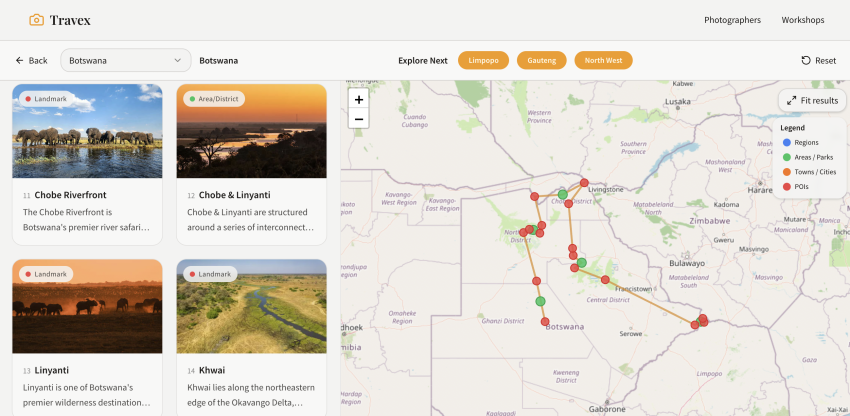
He adds: “When you click on our explore Botswana offering, you’ll find a linked map showcasing the main points of interest (POIs) to keep in mind. Follow our route, or create your own – just be sure to click through to each POI, such as the Okavango Delta, so you don’t miss anything distinctive from a travel-planning or photography perspective along your chosen route.”
4 Botswana highlights
1. The stark beauty of the Makgadikgadi Salt Pans
The Makgadikgadi Pans comprise an extensive network of salt pans and surrounding grasslands, rocky islands, and other landscapes in Botswana’s Kalahari Basin. The landscape can present an expansive, pale horizon, although the pans are not uniformly white or dry throughout the year: seasonal rainfall can transform some areas into shallow lakes and attract large numbers of birds and other wildlife.
What to do: Take a guided excursion with an operator experienced in local conditions onto suitable sections of the Ntwetwe or Sua (Sowa) Pans, or visit Kubu Island – a rocky granite outcrop known for its baobabs and views across the surrounding pan. Do not assume that all areas of the pans are accessible by ordinary 4×4 vehicles; routes and conditions depend on rainfall, surface conditions, and local access arrangements.
What to photograph: Capitalise on the landscape’s minimalism. Capture baobabs along the pans’ margins or on rocky islands against the open horizon, using the low-angle light around sunrise or sunset to emphasise their silhouettes. Guided meerkat experiences are available in parts of the Makgadikgadi region, but sightings and photographic opportunities are not guaranteed. You may just be lucky!
2. The wild heart of Savuti and Moremi Game Reserves
Savuti, in the western part of Chobe National Park, and Moremi Game Reserve, in the Okavango Delta region, are distinct wildlife destinations that can be combined on a longer self-drive itinerary. Savuti is known for predator sightings, including lions and spotted hyenas – although wildlife encounters are unpredictable and vary with the season and local conditions. Moremi protects a mosaic of habitats in both the eastern and central Okavango Delta regions.
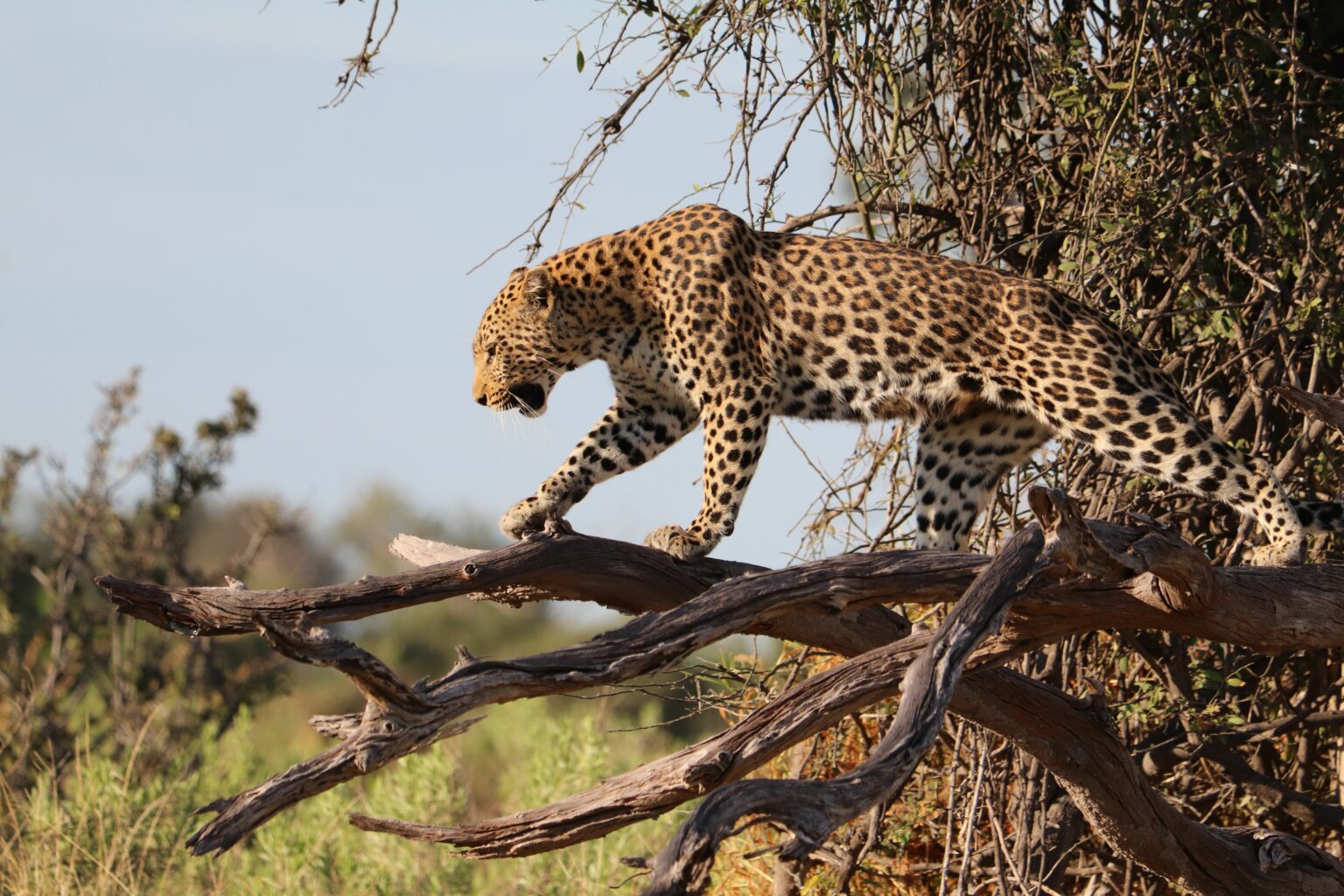
What to do: Test your 4×4 driving skills on sandy tracks and other challenging sections where permitted, after checking current road and park conditions. Watch for African wild dogs, lions, leopards and other wildlife, while maintaining a safe distance and following park regulations. Allow sufficient time between destinations: distances, slow driving conditions, and seasonal road closures can make these transfers considerably longer than expected.
What to photograph: Look for wildlife in the softer light of early morning and late afternoon. Low-angle compositions of lions walking along sandy tracks can emphasise their movement, while a longer lens can help frame leopards resting in trees without approaching too closely. Always photograph from a legally permitted position, and never leave your vehicle in areas where doing so is prohibited or considered unsafe.
Also see: Why Johannesburg families should take their kids on safari
3. The abundant waters of the Chobe Riverfront
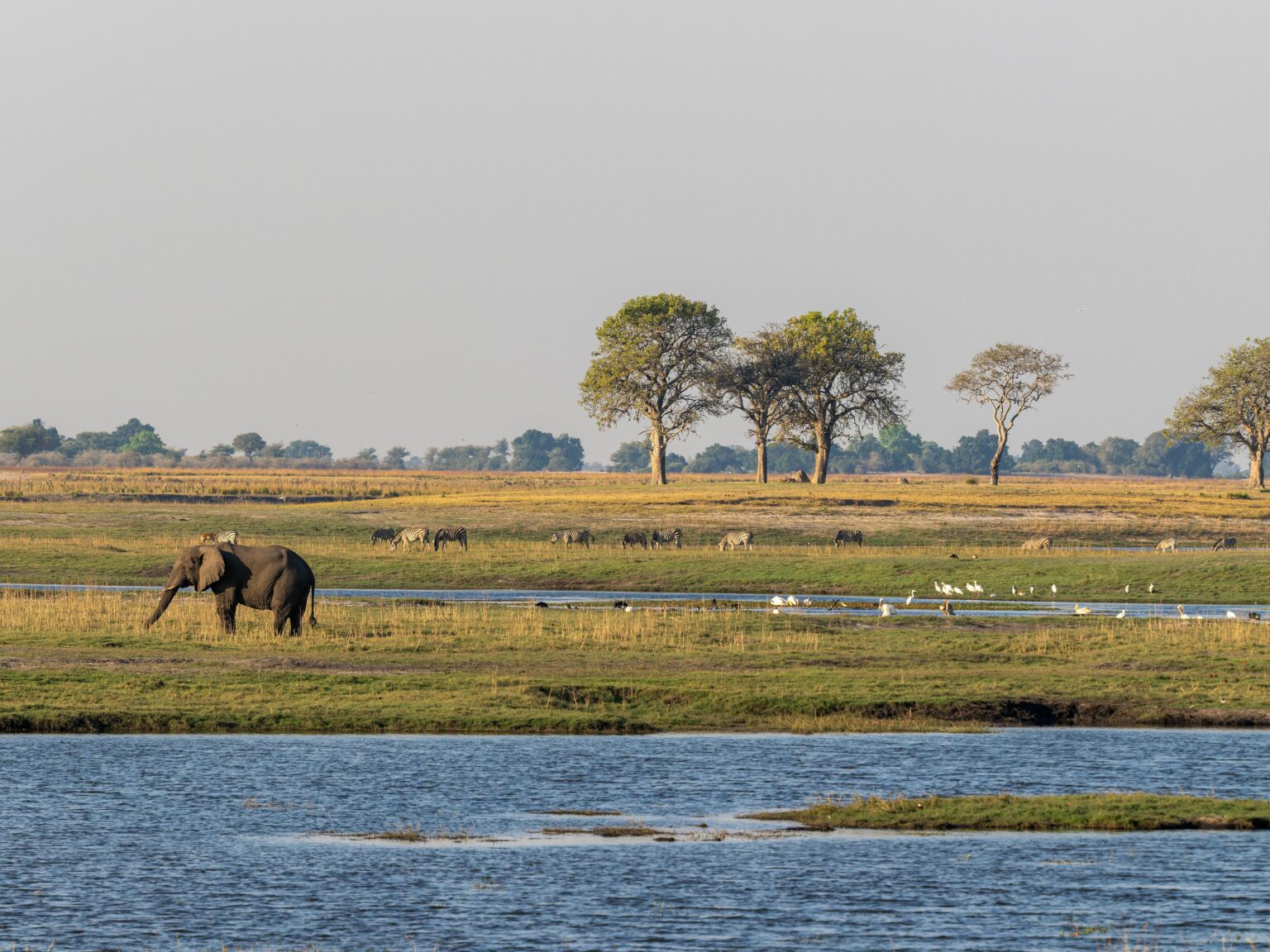
Heading towards Kasane brings you to Chobe National Park, renowned for its large elephant population and the concentrations of wildlife that gather along the Chobe River – especially during the dry season. The riverfront offers a contrast to the arid landscapes of the pans, with opportunities to photograph elephants, hippos, crocodiles, and numerous bird species.
What to do: Park your 4×4 and swap the driver’s seat for a guided boat cruise along the Chobe River. Choose a departure time that suits your photographic objectives, and confirm the operator’s schedule and availability well in advance.
What to photograph: Use a telephoto lens from the boat to capture elephants entering the water, hippos surfacing, and fish eagles perched along the river. A boat can provide a useful low-angle perspective, but stability varies with the vessel, current, and other riverine traffic. Use a sufficiently fast shutter speed for moving wildlife, and protect camera equipment from water and dust. Late-afternoon light adds warmth to river scenes, while exposure compensation may preserve detail in bright water and pale animal skin.
4. The oasis of the Okavango Delta
Maun is a principal gateway to the Okavango Delta, a UNESCO World Heritage site in north-western Botswana. The Delta comprises permanent wetlands and seasonally flooded plains, creating a shifting mosaic of lagoons, channels, islands, and grasslands. Its water levels and wildlife-viewing opportunities vary with the annual flood cycle, which is driven largely by seasonal rainfall in the Angolan highlands, as well as the local rainfall and conditions within the Delta.
What to do: Glide through suitable waterways in a mokoro, which is a traditional dugout canoe or a modern replica, accompanied by a local poler. Mokoro trips depend on water levels, location, and operator arrangements; not all parts of the Delta are accessible by road, and some remote camps are reached by light aircraft or boat rather than by self-drive vehicle. To appreciate the scale of the ecosystem, consider a scenic helicopter or fixed-wing flight – subject to availability and the operator’s flight arrangements.
What to photograph: From a scenic flight, a wide-angle lens can capture the broader pattern of waterways, islands, and floodplains, while a standard zoom can isolate details in the landscape. From a mokoro, focus on reflections, aquatic vegetation, birds, and the transition between open water and reeds. Secure equipment carefully, protect it from any water splashes, and follow the operator’s guidance on wildlife distance and camera use.
Average costs for a 4-star self-drive trip
“Opting for a self-drive Botswana itinerary that pairs upscale lodges or fully equipped permanent camps with curated guided excursions offers a seamless mix of personal independence and premium comfort,” notes Edelstein. “Final expenses are dictated by travel dates, lodging tiers, 4×4 choices, route complexity, and booked excursions. Because these variables shift, travellers are advised to secure a detailed, itemised quote from their safari planner before finalising their travel budget.”
Featured image: Supplied
Also see: All the must-haves to pack for your guided game drive
Be the first to know – Join our WhatsApp channel for content worth tapping into. Click here to join!