
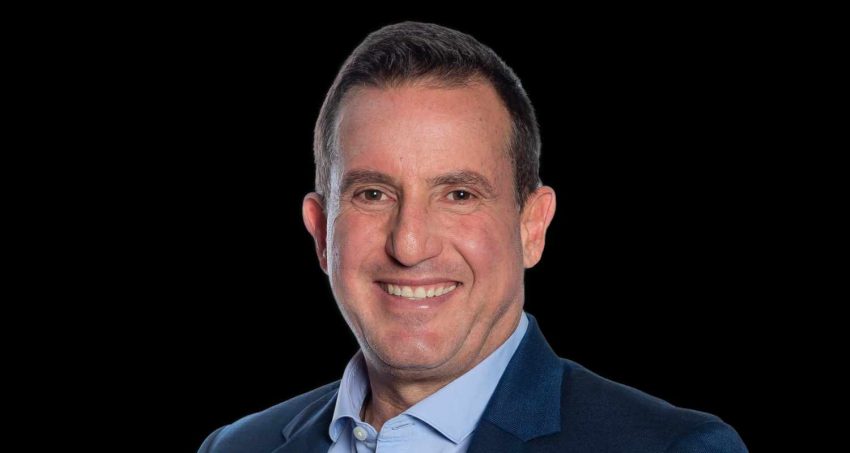

Blu Label Unlimited Group is building what it describes as an “integrated energy ecosystem” that spans smart meter roll-outs, municipal revenue recovery and small-scale power generation — a strategy it believes no other South African company can replicate.
Speaking to journalists after the release of its interim results on Wednesday, co-CEO Mark Levy outlined a three-pronged energy strategy anchored in the group’s Cigicell subsidiary and the newly created BluEnergy Trading unit.
The plan leverages Blu Label’s decades-old contractual relationships with municipalities and its existing role as the country’s dominant distributor of prepaid electricity tokens — a business that now processes R3-billion to R4-billion/month in transactions.
At the centre of the strategy is what Blu Label calls “revenue assurance” — a programme it says was conceived and designed internally.
The concept is built around the fact that municipalities are buying electricity correctly from Eskom but failing to collect what they sell. Blu Label estimates that about 30% of electricity distributed by municipalities is lost, stolen or otherwise unaccounted for. Across the industry, this represents tens of billions of rands in missing revenue.
“If you equate that across the industry numbers, you talk about tens of billions of rands,” said Levy. “You look at the loss in cash flow, you look at the loss in profits for municipalities, you look at the loss in cash flow for government, for Eskom, you look at the loss at Sars from a VAT point of view — we talk about billions and billions of rands.”
Revenue-assurance agreements
The programme works on an at-risk model. Blu Label and the municipality agree on a baseline of existing collections. If Blu Label’s team cannot improve on that baseline, it does not get paid. Where it does find unbilled or incorrectly billed consumption, it keeps an agreed percentage of what it recovers — similar to a debt recovery arrangement.
The process involves deploying ground teams to visit properties, geo-code each location, replace meters where necessary, tag meters to the correct customer accounts, verify that the correct tariff is being applied and reconstruct billing histories. Under prevailing legislation, municipalities can recover arrears going back up to 36 months.
The focus is initially on large power users, which typically account for about 65% of a municipality’s electricity consumption.
Read: Blu Label resumes dividends as it draws line under Cell C saga
Levy presented an illustrative example for one municipality showing that, by recovering just 40% of the missing revenue over a 10-year period, the municipality would collect an additional R19-billion in revenue.
Blu Label has signed two revenue-assurance agreements: a 10-year contract with the City of Ekurhuleni and a three-year contract with the City of Tshwane. Several others are in the pipeline, the company said.
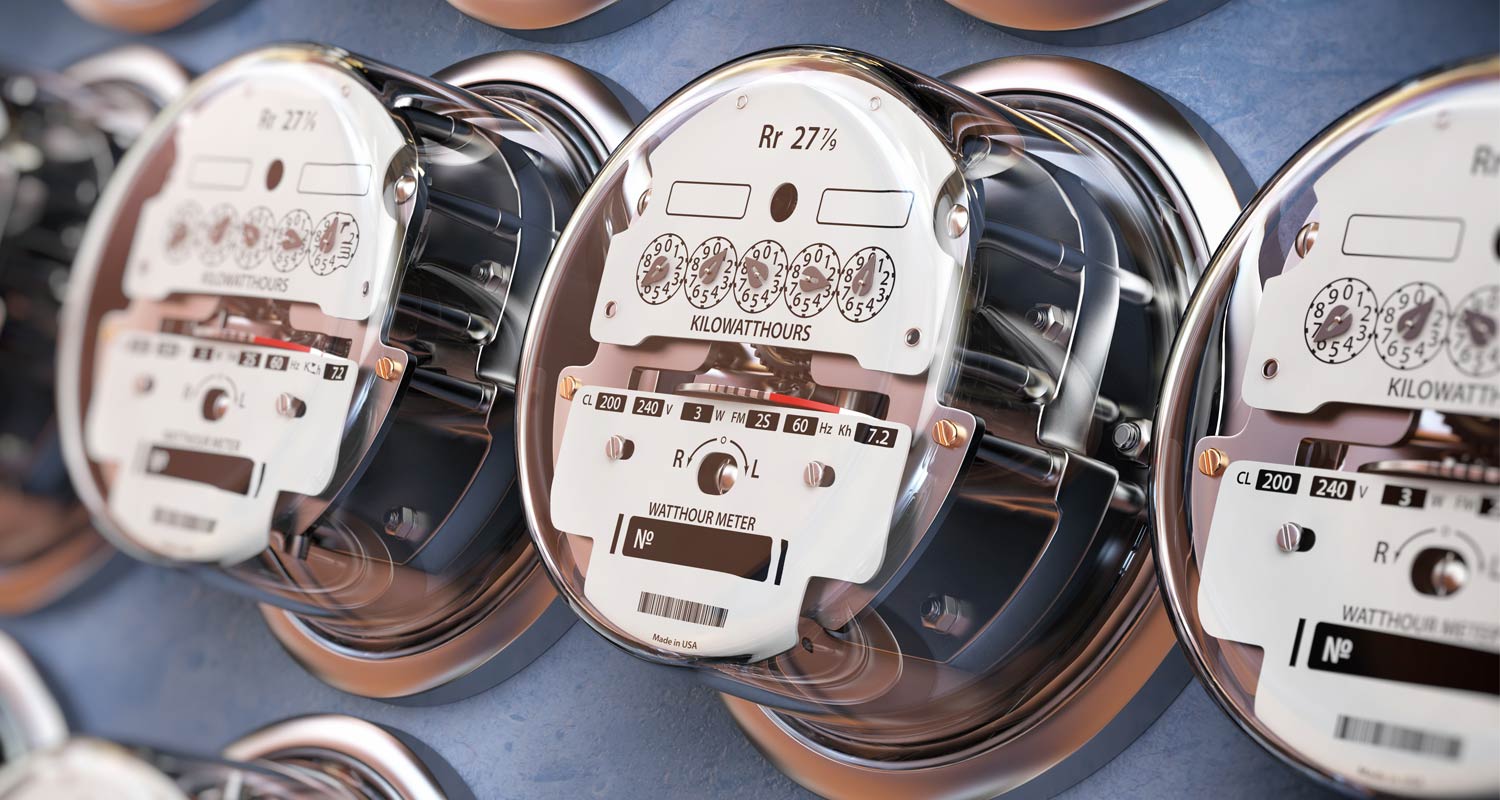
In parallel, Cigicell has secured one of several RT29 transversal contracts — a pre-approved government procurement mechanism — for the roll-out of smart meters. Levy said Cigicell was, in practice, the only recipient among the nine that operates directly in the prepaid electricity distribution space, and that the company has already deployed tens of thousands of meters under these contracts.
The smart meter roll-out feeds directly into the revenue-assurance programme: replacing old or tampered meters is a necessary first step, but without also correcting billing records and tariff classifications, it solves only part of the problem.
The third leg of the strategy is BluEnergy, a unit designed to build and operate small-scale solar and battery plants that feed electricity directly into municipal substations, or nodes.
Rather than competing with large independent power producers building plants of hundreds of megawatts, BluEnergy plans to build facilities of 10-40MW at individual substations. Levy argued the approach offers significant advantages in speed and risk diversification.
“If someone wants to build a 200MW plant, it would probably take four or five years to build and cost R4-billion to R5-billion,” he said. “If we roll out on the nodal model — 200MW across 10 or 20 nodes — we could be up within 15 months. And we’d have no concentration risk.”
The model requires a power-purchase agreement with the relevant municipality, land within about five kilometres of the substation, an assessment of the substation’s long-term viability, and — critically — cash flow security to fund the projects.
Solar, batteries
This is where Blu Label’s existing municipal relationships become the enabler. Because Cigicell already collects electricity payments on behalf of municipalities, it can offer banks and funders visibility into predictable cash flows, allowing it to establish escrow accounts and secure project finance.
“There are lots of funds out there looking at infrastructure funding,” said Levy. “All the banks have come to us because of the cash flow security.”
Co-CEO Brett Levy added that the capital for BluEnergy projects would come from infrastructure lenders and green energy funds rather than from Blu Label’s own balance sheet.
Read: Blu Label takes R5.2-billion Cell C hit, touts clean slate ahead
One novel element of the design involves building paired solar plants — one generating during daylight hours while the other charges batteries. When the sun goes down, the batteries discharge, providing a constant output.
The final piece is the energy trading licence recently awarded to BluEnergy by energy regulator Nersa. Blu Label described the licence — which took years to obtain — as a major milestone that allows the group to act as an energy off-taker: buying, selling and trading energy, whether self-generated or procured from third parties.

The licence opens the door to trading energy to municipalities and large power users, further extending Blu Label’s reach across the electricity value chain.
The strategy is, in part, a response to years of margin compression in Blu Label’s traditional prepaid electricity business. Although electricity revenue generated on behalf of municipalities grew 11% to R24.3-billion in the six months to end-November 2025, commissions earned by Cigicell fell 10% to R144-million as municipalities squeezed the distribution margin.
“You started getting significant margin compression, where the municipalities would reduce their margin to the distribution channel,” said Levy. “Your turnover would increase, but your percentage earn — because we get paid on kilowatt-hours, not turnover — started to decrease.”
Read: Blu Label lands electricity trading licence from Nersa
The energy ecosystem strategy is Blu Label’s answer: rather than simply distributing tokens, it aims to become an indispensable partner to cash-strapped municipalities by helping them recover lost revenue, modernise their metering infrastructure, and secure cheaper, cleaner energy supply. – © 2026 NewsCentral Media
Get breaking news from TechCentral on WhatsApp. Sign up here.