
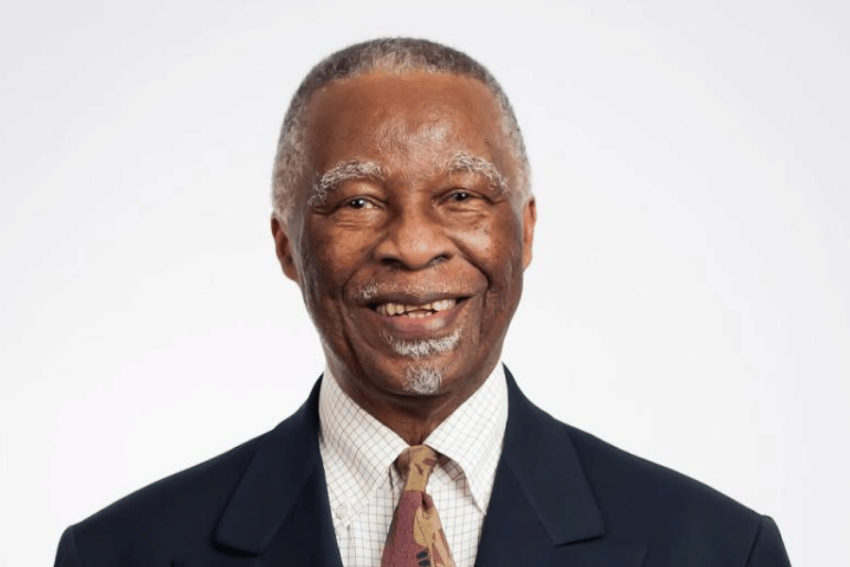
Retired SAPS Colonel Louis Bester has refuted claims that he pushed for former President Thabo Mbeki and other senior ANC leaders to be prosecuted for apartheid-era crimes, telling the Khampepe Commission of Inquiry the allegations are false and that he never had access to the highly sensitive ANC 37 dockets.
Bester, who served as a crucial operational link in the police’s handling of unresolved Truth and Reconciliation Commission (TRC) cases, took the stand this week to address claims that he met with prosecutors to orchestrate political prosecutions.
At the centre of his testimony was the controversial transfer of a large cache of apartheid-era case files from the National Prosecuting Authority (NPA) to the South African Police Service (SAPS) and the role of the Priority Crimes Litigation Unit (PCLU), headed by Advocate Anton Ackermann between 2003 and 2013.
Under cross-examination, Bester faced tough questions over claims he met with NPA prosecutor Advocate Chris Macadam to push for charges against Mbeki and other senior ANC leaders.
He denied it under oath.
“None of these encounters would have resulted in me having any knowledge in respect of the ANC 37. Hence, I was never tasked to investigate such dockets,” Bester testified.
Bester maintained that his actions were strictly operational, bound by police protocol, and had nothing to do with political manoeuvring to target or protect the Mbeki administration.
He told the Commission that prosecuting top military generals risked exposing the senior political figures who were pulling the strings behind the scenes, and that he acted only as a vital link between senior security officials who issued instructions and the lower-ranking members who carried them out.
The “ANC 37” is a group of 37 senior ANC leaders, including former President Thabo Mbeki, who jointly sought blanket amnesty from the Truth and Reconciliation Commission in the late 1990s.
The Commission is probing political interference in the prosecution of TRC cases, including allegations that the Mbeki administration deliberately suppressed cases involving both apartheid operatives and ANC members to protect a fragile political settlement.
A key focus of Bester’s testimony was the handling of the so-called ANC 37 dockets – sealed files relating to ANC members who were denied amnesty or did not apply for it.
When questioned about whether police had inappropriately interfered with or accessed sensitive political prosecution files, Bester was explicit.
He denied having prior knowledge of or access to the ANC 37 dockets, insisting they remained sealed under the exclusive jurisdiction of state prosecutors.
The retired colonel also detailed a frantic nine-day investigation in August 2007, triggered after then-SAPS divisional commissioner Johan de Beer instructed him to look into allegations that police had forged a critical document related to the TRC cases.
To clear the SAPS name, Bester said he sought an independent forensic opinion.
“I requested a quotation just for another opinion on the forged document so that we could make sure that we were on the right track as far as the forgery is concerned,” he testified.
That investigation concluded after a forensic consultant confirmed no forgery had occurred.
Bester’s testimony comes as the Khampepe Commission attempts to untangle decades-old claims of a political deal to bury TRC prosecutions.
Former President Mbeki has previously denied any interference, but witnesses have alleged that both NPA and SAPS leadership were under pressure not to pursue cases that could destabilise the post-apartheid state.
He said none of his investigative encounters or meetings were part of a coordinated plot to target Mbeki or to access sealed files.
His role, he said, was to implement instructions and ensure lower-ranking members executed them.
The Commission is expected to continue testing that version against testimony from former prosecutors and intelligence operatives who claim the decision not to prosecute the ANC 37 and other TRC cases was political, not legal.