
The ANC has acknowledged that the accountability and performance of its councillors required a ‘much bigger improvement’ as the governing party reviews its record ahead of the 2026 Local Government Elections.
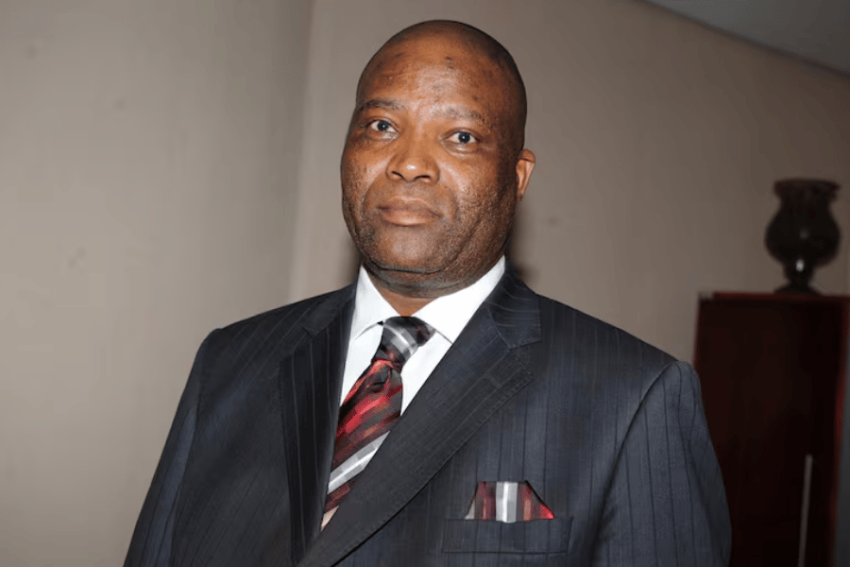
The ANC’s Deputy chairperson of the local government intervention task team and deputy Minister of Cooperative Governance and Traditional Affairs Dickson Masemola said ward councillors needed to be held more directly accountable by the communities that elected them, with the party seeking to strengthen this process ahead of the November elections.
“They have been elected by communities, and the law provides that platform to hold these councillors accountable directly in terms of their performance,” Masemola said.
“So it’s one area that we have seen over the past five years, that it requires a much bigger improvement.”
Masemola was speaking during an ANC manifesto review media briefing on Wednesday, as the party assessed the implementation of its 2021 Local Government Elections Manifesto and outlined lessons that will inform its 2026 manifesto.
The ANC has said the review covered 102 commitments across key areas of local government, with the party describing the process as an opportunity to assess its governance record, identify implementation challenges and shape a more implementation-driven manifesto for the next local government term.
Masemola said the ANC had consistently set expectations for its public representatives but acknowledged that some councillors may not have performed at the level expected by the organisation.
“There could be instances where some of them might have not performed maximally as the movement would have actually expected,” he said.
He said the party had been working through its provincial and regional structures to strengthen political oversight and accountability.
Masemola pointed to ward committees as one of the mechanisms through which communities can hold councillors accountable, arguing that councillors should not view themselves as accountable only to the ANC.
“They don’t necessarily account to the ANC alone,” he said.
He said communities had a legally provided platform to scrutinise the performance of councillors through ward committees and other mechanisms of public participation.
The ANC also intends to place greater emphasis on the role of communities in selecting its candidates for the upcoming elections.
Masemola said the party wanted to identify “the best, the hardworking councillors” and ensure that communities played a meaningful role in the selection process rather than candidates simply being imposed by the organisation.
He said this would form part of the ANC’s broader approach to “cadreship” ahead of the elections, alongside performance contracts and agreements.
“The primary role of communities is very sacrosanct,” Masemola said.
He argued that a councillor’s legitimacy ultimately rested on the community they served.
“There is no councillor who can claim authority and relevance and legitimacy unless his councillorship or her councillorship is based on the extent to which communities that we are serving are working with us.”
Masemola also sought to defend the ANC’s record in local government, arguing that the deterioration of a number of municipalities should not be attributed solely to the party.
He placed significant blame on the rise of coalition politics in municipalities since 2016, arguing that the displacement of the ANC from leadership positions had contributed to instability and poor governance in several major municipalities.
According to Masemola, coalition governments had resulted in difficulties with governance, financial administration and service delivery because of competing political interests.
“The main cause of all these issues is leadership, because everything stands and falls on leadership,” he said.
He argued that coalition dynamics had contributed to “permanent systemic problems” in municipalities that he claimed had not existed to the same extent previously.
Masemola cited Johannesburg among the municipalities where the ANC wants to regain political control, saying the party believed it had the capacity and policies required to restore the city.
“Johannesburg, it is a matter of time, and we want to basically restore this city to its glory,” he said.
But he acknowledged that doing so would require voters to return the ANC to power.
“We are coming back to them once again and say: for the past 10 years, from 2016 to date, we have seen how coalitions and how this mismanagement would have impacted negatively on governance, on financial administration, on delivery of services.”
Masemola said the ANC was preparing to contest all 257 municipal jurisdictions in the country and wanted voters to give it the mandate to restore what he described as better financial management, institutional capacity, infrastructure delivery and reliable services.
He said the party’s reviewed manifesto would provide the policy framework for that approach.
Masemola also linked the ANC’s local government reforms to the ongoing review of the White Paper on Local Government, saying policy and regulatory changes would be required to address weaknesses identified in the current system.
He argued that effective local government required greater alignment between national, provincial and municipal spheres, particularly where coalition governments were in place.
According to Masemola, political differences at municipal level could create a disconnect between national policy objectives and implementation on the ground.
He said the ANC was therefore seeking a stronger alignment across the three spheres of government.
The party’s manifesto review comes as it prepares to campaign for a return to power in municipalities where it has lost control, while defending its record in areas where it remains in government.
Masemola said the ANC believed it had learned lessons from the past five years and was now asking voters to give it another opportunity to govern.
“We have learnt enough, we have got the package through this reviewed manifesto,” he said.
“We are just asking for one thing and one thing only: their vote.”