





An AI boom has driven stock markets to record highs and big tech firms are piling hundreds of billions of dollars into new tech, while consumers, workers and businesses are grappling with existential questions unleashed by the likes of ChatGPT and Claude.
Some analysts say artificial intelligence will boost productivity and make businesses more profitable. But others warn of a dystopia of AI-fuelled mass unemployment where some sectors no longer exist.
Meanwhile, the market frenzy over Elon Musk’s SpaceX has reached fever pitch ahead of its IPO expected on Thursday afternoon.
The AI-driven rally has helped drive equity markets to record highs, offsetting risks created by the Iran war. AI bellwether Nvidia alone has rocketed over 1 300% since the end of 2022. Its quarterly earnings, a gauge of the broader AI narrative, are as closely watched by investors as some economic indicators.
Microsoft, Google owner Alphabet and Amazon — dubbed “hyperscalers” because of their focus on building AI data centres — are also popular.
It’s not just a US story. European tech stocks, which include chip-making machine giant ASML, are at their highest since 2000. South Korea’s market, home to chip maker Samsung Electronics, is near a record.
$1-trillion club
SK Hynix and Micron Technology meanwhile have been floating in and out of the elite group of companies with a market capitalisation of at least US$1-trillion. This group could get bigger with upcoming new listings, including SpaceX.
It’s no surprise that the tech stock surge has stoked concerns about a bubble that could drag stocks down sharply if it pops.
A divide is emerging between companies that investors reckon will benefit from the megatrend and those whose business models investors suspect could be disrupted, or replaced.
Read: Apple finally overhauls Siri in late bid to catch AI rivals
Software and data analytics firms are recovering after a slide in February as a new AI tool by Anthropic spooked investors. How quickly businesses adopt AI is key as this will give some sense of the impact on productivity gains and jobs markets. The impact is relatively limited so far.
Still, the US Census Bureau’s Business Trends and Outlook Survey provides a near real-time gauge of corporate uptake. And what happens in the US could be a guide to what follows in other big developed economies.
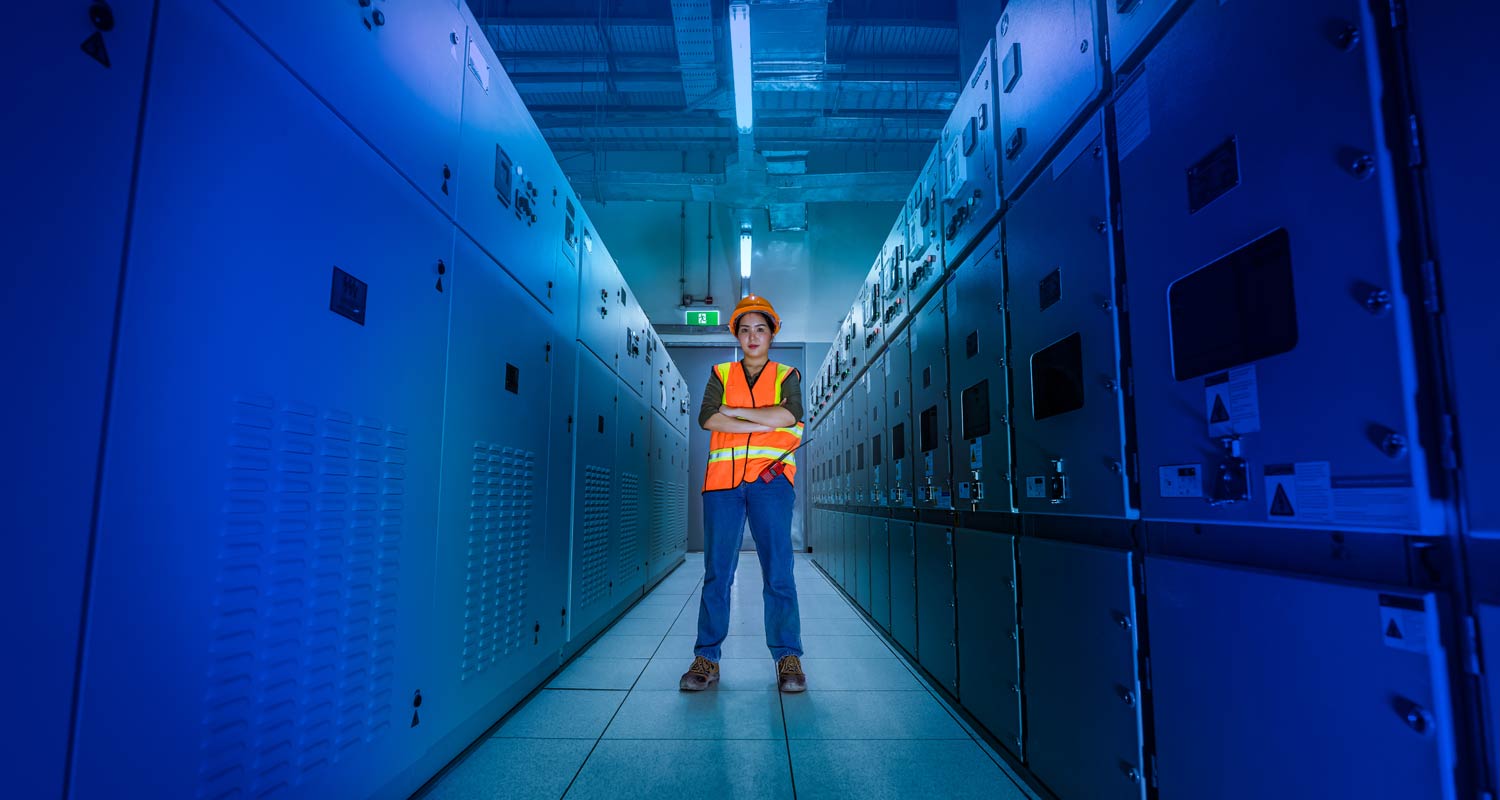
As more workers add AI tools to their arsenal and potentially replace the need for human input, there are questions over how this will affect employment. Companies are already citing AI as a factor leading them to slash jobs.
A race to build the infrastructure needed to support AI is on. Morgan Stanley estimates big tech will spend $3-trillion between 2025 and 2028 on a global expansion of data centres. The massive investment in data centre projects is helping to underpin economic growth, especially in the US.
Yet, data collated by DC Byte shows projects in several major countries remain at an early stage. Around 68% of the 679 US data centre projects it tracks are still not yet being built, for instance. This figure includes all data centre projects including those for AI purposes. The build-out is increasingly being funded by debt, raising financial stability risk concerns.
Read: AI giant Anthropic files for landmark US listing
The data centre build-out is driving an unprecedented surge in electricity demand globally, running up against power constraints across regions, as projects grapple with ageing grids and limited supply. As well as delaying projects and forcing data centres to be more flexible, the surge is raising concern about the environmental impact and potential for higher consumer prices. Global utilities stocks have jumped roughly 40% since late 2022. — Lucy Raitano, (c) 2026 Reuters