


ActionSA has raised concerns over what it describes as the slow pace of Parliament’s newly established Section 89 Committee.
The party has warned that further delays in the long-running Phala Phala accountability process risk undermining public confidence in Parliament’s ability to hold the executive to account.
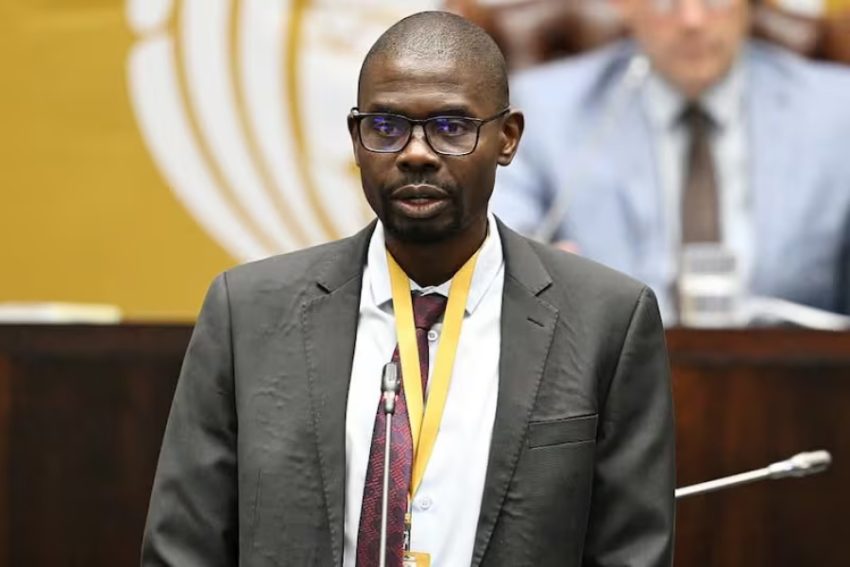
The criticism comes as Rise Mzansi has moved to defend the appointment of its chief organiser, Makashule Gana, as chairperson of the committee tasked with investigating whether President Cyril Ramaphosa committed serious violations of the Constitution or the law in relation to the Phala Phala farm saga.
In a statement, ActionSA parliamentary chief whip Lerato Ngobeni said South Africans had already waited more than three years for Parliament to fulfil its constitutional obligations following allegations linked to the burglary at Ramaphosa’s Phala Phala game farm.
“A process that has already been delayed for more than three years cannot be subjected to further unnecessary delays,” Ngobeni said.
“South Africans have waited long enough for Parliament to fulfil its constitutional duty and ensure accountability at the highest level of government.”
Ngobeni drew comparisons between the pace of the Section 89 Committee and Parliament’s response to allegations previously made by Lt-Gen Nhlanhla Mkhwanazi.
She noted that despite Parliament being in recess at the time, the ad hoc committee established to deal with those allegations moved swiftly, electing a chairperson within days of its establishment and adopting terms of reference within weeks.
“By comparison, Parliament is currently not in recess, yet the Section 89 Committee is scheduled to only hold its first meeting on 22 June 2026, almost three weeks after electing its chairperson merely to begin discussing draft terms of reference,” she said.
“South Africans are entitled to ask why urgency applies in one matter but not in another. Parliament cannot operate at two different speeds when the issue at hand is presidential accountability.”
ActionSA has called on the committee to urgently finalise its terms of reference and begin its work without further delay.
The Section 89 Committee was established after the Constitutional Court of South Africa ruled that the National Assembly’s decision to terminate investigations into the Phala Phala matter was unconstitutional.
The committee is expected to determine whether Ramaphosa committed any serious misconduct that could warrant impeachment proceedings under Section 89 of the Constitution.
However, even before substantive hearings have begun, the committee has become the subject of political contestation following Gana’s election as chairperson.
Parties outside the Government of National Unity opposed his nomination and instead backed United Africans Transformation ‘s (UAT) Wonderboy Mahlatsi for the position, arguing that Gana’s appointment was effectively supported by the ANC and its GNU partners.
Addressing the media on Monday, Rise Mzansi leader Songezo Zibi dismissed suggestions that Gana’s appointment compromised the committee’s independence.
Zibi argued that the chairperson’s role was not to determine guilt or innocence, but rather to ensure that the process was conducted fairly and in accordance with constitutional requirements.
“The most important responsibility of a chair is to make sure that we have a process that reflects the relevant constitutional provisions,” Zibi said.
He added that South Africa was entering uncharted territory as the country had never before undertaken a parliamentary impeachment process against a sitting president.
“It’s an extremely serious matter that cannot be left to silly political theatrics,” Zibi said.
“You need somebody who’s got the temperament, somebody who’s got the experience.”
Zibi pointed to Gana’s parliamentary experience, noting that he had served more than one term in Parliament and currently sits on key structures including the Rules Committee and the Ethics Committee.
He also rejected criticism that coalition politics had somehow tainted the process, arguing that any candidate seeking election as chairperson would inevitably require support from multiple parties represented in Parliament.
“People forget he was a DA MP, he’s on the Rules Committee, he’s on the Ethics Committee and he’s a caucus chief whip representing all the other political parties from the IFP on down,” said Zibi.
For his part, Gana has sought to assure political parties and the public that the committee’s work will be transparent, inclusive and guided by due process.
Gana said one of the committee’s immediate priorities would be to agree on terms of reference that will define the scope of the inquiry and establish the rules governing proceedings.
According to Gana, the committee will also need to appoint evidence leaders who will assist members in examining evidence and managing hearings.
“So, once we have the witnesses, we’ll give a timeframe,” he said.
“At the moment, it will be wishful on my side. Let’s allow the committee to have its second meeting, where we’ll deal with the terms of reference.”
Gana also made it clear that pending legal challenges would not automatically halt the committee’s work.
“The work can only be halted or stopped when ordered by a competent court,” he said.
He stressed that the process would not take place behind closed doors and that all political parties represented on the committee would have an opportunity to contribute to decisions, including the nomination of evidence leaders.
“The process must be owned by the committee,” Gana said.
The committee is expected to hold its next meeting later this month, where members will begin finalising the framework that will govern what could become one of the most consequential parliamentary inquiries in South Africa’s democratic history.
Its work will ultimately determine whether sufficient grounds exist for Parliament to proceed with impeachment proceedings against Ramaphosa over the Phala Phala matter.