
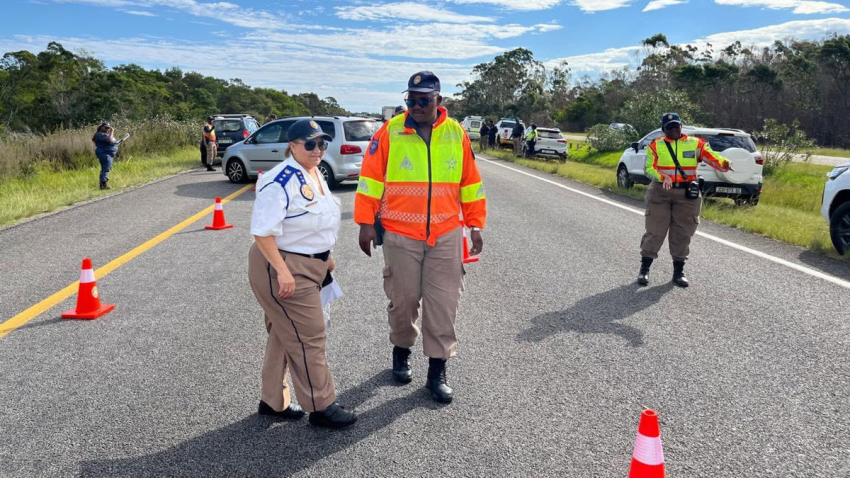
South African motorists could receive fines and demerit points for traffic offences they did not commit under the new AARTO system.
Organisation Undoing Tax Abuse CEO Wayne Duvenage warned that cloned number plates and outdated vehicle records could cause serious problems.
He said motorists could be linked to offences committed by other drivers if their plates were copied or ownership records were not updated after a vehicle sale.
“You will be picking up fines that potentially belong to other people because of cloned number plates,” Duvenage told Newzroom Afrika.
He warned that incorrect demerit points could threaten the livelihoods of people who rely on driving for work.
New rollout faces court challenge
Government proclaimed the next phase of the Administrative Adjudication of Road Traffic Offences system on 29 June 2026.
The rollout to 62 municipalities was scheduled to begin on 1 July.
OUTA launched an urgent High Court application seeking to suspend the rollout.
The organisation argues that government activated the system without putting the required legal protections in place.
Its main concern is the absence of a functioning independent Appeals Tribunal.
The tribunal is meant to hear challenges from motorists who dispute infringements.
Appeals protection not available
OUTA executive director Advocate Stefanie Fick said enforcement had started before one of the most important protections for motorists was available.
She said government had a legal duty to ensure that alternatives to existing remedies were operational before limiting those remedies.
OUTA wants implementation halted until government meets its legal and constitutional obligations.
Municipalities raise cost concerns
The South African Local Government Association also approached the High Court to stop the rollout.
SALGA said the financial model would force municipalities to spend more on AARTO than they could recover.
It warned that local governments could end up subsidising the system at the expense of essential services.
The Pretoria High Court dismissed SALGA’s urgent application because it found the matter lacked urgency.
However, SALGA said the main issues remain unresolved and will be argued later.
Its Public Transport and Roads Working Group chairperson, Sebang Motlhabi, said the organisation’s legal team was preparing to take the case forward.