
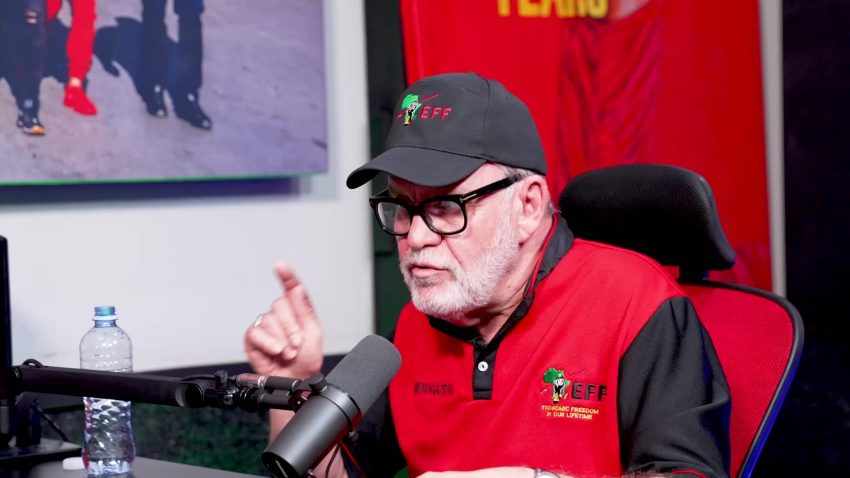
Military veterans could be removed from the Department of Military Veterans’ database to help balance its books, EFF MP Carl Niehaus has warned.
Niehaus accused the department of risking the exclusion of deserving veterans as it battles a pension funding crisis.
His warning followed a presentation to Parliament’s Portfolio Committee on Defence and Military Veterans on Wednesday, 11 November where the department’s chief financial officer, Sibongiseni Ndlovu revealed plans for another database cleansing exercise.
The exercise will be conducted by a service provider or a state institution. The department is still developing the terms of reference for the project.
The CFO also acknowledged that the current pension budget had been calculated “with the hope that the database cleansing process was going to identify beneficiaries who were not supposed to be benefiting.”
Niehaus said the department appeared to be relying on removing beneficiaries from its database to manage a funding crisis.
“The department is trying to deal with this crisis through a database cleansing process where they hoped, as the CFO himself said, they would be able to manage the funding crisis by removing as many people as possible from the database.
“I’m not saying that those who ought not to be there should not be identified. I’m also not saying that the means test is not required. But I want to warn against an approach where database cleansing works from the basis of ‘we have no funds, therefore we must get rid of deserving applicants’, because that is what it will eventually translate into: removing people in order to make the books balance. It cannot work like this,” he said.
He argued that veterans’ pensions were not discretionary payments but rights protected by law.
“Pension is not a gift. It is a right listed in the Military Veterans Act. The Act’s principles require that the sacrifices of military veterans must be honoured, and that their quality of life and that of their dependants must be improved,” he said.
Niehaus warned that former members of Umkhonto weSizwe, the Azanian People’s Liberation Army and other non-statutory forces could be particularly vulnerable to exclusion.
He said the department’s financial and administrative failures were now threatening veterans and their families.
“What we are faced with is an unmitigated mess, with devastating consequences for veterans and their dependants and families. It is the result of years of administrative and financial mismanagement.”
He said the country had a moral obligation to ensure that those who qualified received their benefits.
“A society that does not take care of its military veterans, those who fought for our liberation, fails in its ethical, moral and political obligations. Those who are entitled must receive their pensions, and we will not accept anything less,” Niehaus said.
The department has yet to finalise the terms of reference for the database cleansing exercise. It has not indicated how many beneficiaries could be affected or how it will ensure that eligible veterans are not removed because of its funding constraints.