
National Arts Council (NAC) workers who went on strike had their whole April salaries taken back without consultation, Nehawu has told Parliament. Some were left owing up to R10,000 at the end of the month.
Now the NAC wants to pay the money back and then recover it again, the union said.
“In April, at the end of April, after we had come back to work as per the minister’s instruction, our salaries were deducted without any consultation. Under labour law, the employer cannot deduct more than 25% of your salary. They need to sit down with you and come up with a plan for how you’re going to repay those debts,” Zothani Vilakazi said on Tuesday, 10 November.
He spoke in the Portfolio Committee on Sport, Arts and Culture.
ANC MP Gift Motaung asked whether reports that workers had been paid were true.
“Yes, there was a settlement for those who were able to receive those bonuses,” Vilakazi said.
Motaung then asked about the union’s relationship with the council.
“I wouldn’t say we have a relationship as such. We don’t have a platform where we engage with the board. I will say, however, that the process of settling these bonuses is still an issue. What happened was that for all the members who went on strike, their salaries for April were deducted. So we had colleagues who went into that month with minus R9,000 and minus R10,000,” he said.
Motaung asked whether there has been an unpaid on strike.
“Under labour law, the employer can only deduct not more than 25%, whether or not it was an unpaid strike. So management decided they were just going to take all that money. And only now are they trying to fix that problem, where they are saying we’ll pay back the money we took from you in April. But you need to pay it back again.
“So the entity is now trying to take remedial action by paying back the money it took. But if they pay you that amount, you’re going to have to pay it back to the entity. And it has tax implications for us. It’s just messy. Staff morale is low, because I think there could have been a different way of dealing with the situation,” he said.
Asked whether NAC leaders were there to save the sector or enrich themselves, he said: “I wouldn’t say enrich themselves, because I don’t have an idea what happens at management level. However, there are leadership issues at the NAC, and that needs to be really looked at. I’ll just leave it there.”
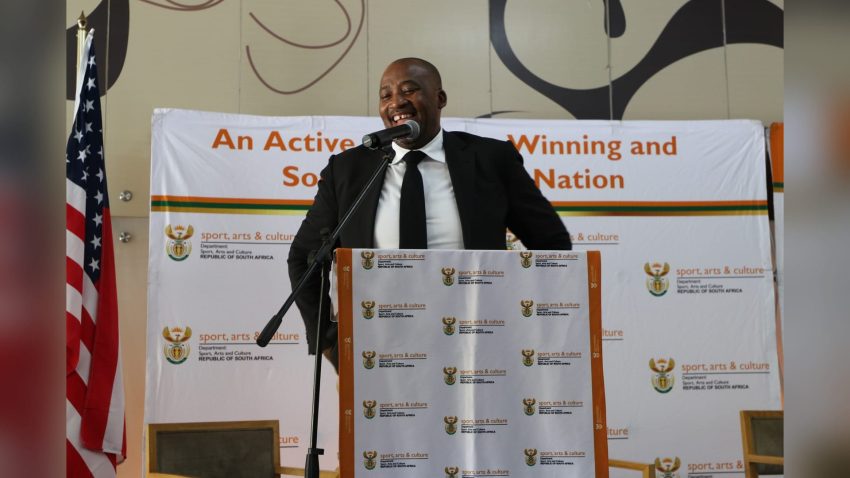
Earlier, Sport, Arts and Culture Minister Gayton McKenzie told MPs he had personally sorted out the strike.
“Nehawu met with me. They told me their grievances. I said to them, give me seven days, I will sort it out. The portfolio committee recommended they should go back to work, and the board then refused for them to go back to work. When I heard of it, I said give me seven days. And they were back at work. They were paid what they should have been paid while they were out. So that tells you we are not only aware, we are actively involved,” McKenzie said.
EFF MP Eugene Mthethwa said the NAC treated workers more harshly than its own officials.
“How do you deduct salaries? If you were to say to the acting CFO, we are going to recoup so much from you, it wouldn’t be nice. But they’re able to do that to employees,” Mthethwa said.
NAC staff went on strike on 18 March 2026 over unpaid performance bonuses from 2019 to 2022. The NAC council has said the bonus claim has no legal foundation.