
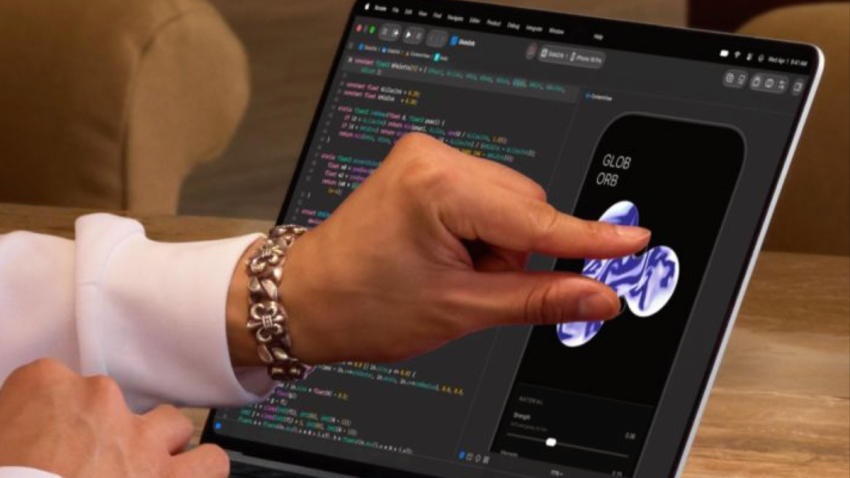
Apple has officially unveiled its first touchscreen MacBook Pro, marking a major change for the company after nearly two decades of rejecting touch-enabled laptops.
The redesigned MacBook Pro introduces an OLED display, Dynamic Island and a touchscreen interface, bringing features previously associated with Apple’s iPhones and iPads to its flagship laptop.
According to a Bloomberg report published by MyBroadband, the new MacBook Pro is thinner, lighter and significantly more expensive than previous models.
New MacBook Pro gets major upgrades
The touchscreen MacBook Pro is available in 14-inch and 16-inch models, powered by Apple’s M5 Pro and M5 Max chips.
Both models feature OLED displays, making them the first Mac computers to use the technology.
Apple has also introduced Dynamic Island to the MacBook for the first time, alongside a redesigned software interface optimised for touch controls.
The 14-inch model starts at $2,899, while the 16-inch version starts at $3,399.
Customers looking for the highest specifications can spend up to $14,549 on a model with 16TB of storage and 128GB of memory.
The laptops are also lighter, with the 14-inch model weighing approximately 1.36kg and the 16-inch model around 1.81kg.
Apple has even brought back its illuminated logo on the back of the laptop.
Steve Jobs once rejected touchscreen Macs
The announcement marks a significant reversal of Apple’s long-standing position on touchscreen laptops.
Apple co-founder Steve Jobs previously criticised the concept, describing touchscreen Macs as “ergonomically terrible”.
Former CEO Tim Cook also opposed combining laptop and tablet features, comparing the idea to merging a refrigerator and toaster.
However, Bloomberg reports that Cook and current CEO John Ternus began supporting touchscreen MacBooks approximately four years ago.
Ternus, who replaced Cook as CEO last month, introduced the redesigned laptop.
Apple faces a struggling computer market
The launch comes as the global computer industry faces declining demand and rising component costs.
According to research firm IDC, worldwide PC shipments fell by 20% during the third quarter.
Apple also experienced declining shipments, although its losses were smaller than the industry’s overall decline.
The company hopes its premium features will attract customers and boost Mac revenue despite higher prices.
The touchscreen MacBook Pro represents one of Apple’s biggest changes to its laptop range in years.

I’m a writer, editor and software developer at Newsroom ZA.
I build things, break them (on purpose), then turn the chaos into clean, readable stories. You’ll usually find me bouncing between breaking news, politics and entertainment.