
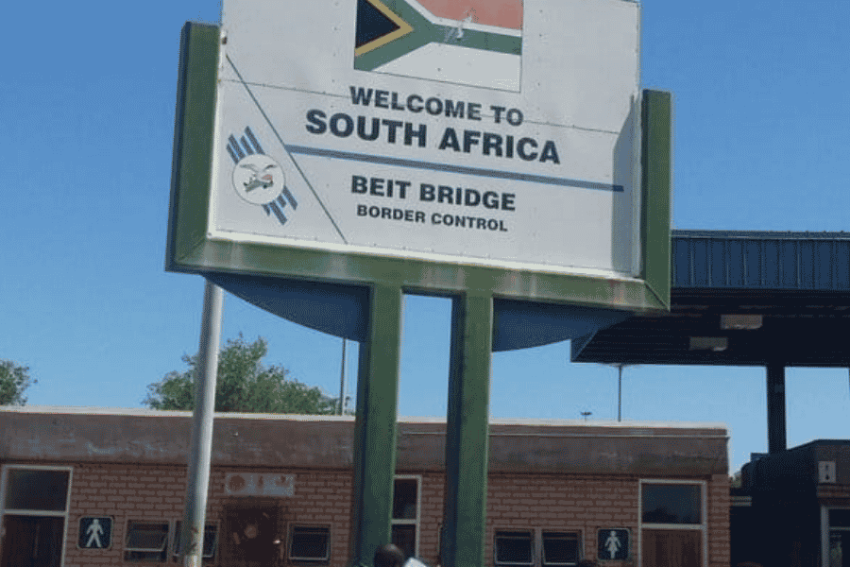
Asylum seekers will be screened at South Africa’s borders before being allowed inland under plans to relocate refugee centres to the borderline.
The Refugee Appeals Authority of South Africa (RASA) revealed the plan on Friday, 9 October.
RASA chairperson Zilpha Raphesu told Parliament’s Portfolio Committee on Home Affairs that the screening would form part of the changes to the refugee system.
“We believe that the overhauling of the legislation will also assist with determination of appeals in this space, especially the President’s directive to move the refugee centres to the borderline, because we will be conducting a pre-screening at the borderline,” Raphesu said.
“Those that will be accepted inland will be those that are deserving of asylum.”
Raphesu said appeals bodies would also move to the border to deal with rejected claims.
“Us as statutory bodies, we will also be taken along to the borderline, so that those that were found to be unfounded or manifestly unfounded, we will also be adjudicating them there,” she said.
Home Affairs told the committee that the Tshwane refugee centre must close by 31 December. Its services will move to Beitbridge and the Musina refugee centre.
Raphesu also warned that some foreign nationals were using asylum applications to evade prosecution in their home countries and delay extradition.
“We are unfortunately as RASA sitting with criminals that honourable members are referring to,” she said.
“It is worrying every time to receive a call from State Security, because those that are channelled to us are those that are fleeing from prosecution, not persecution, prosecution from their countries of origin.”
She said asylum applications were complicating extradition efforts.
“The Minister of Justice is struggling to extradite people through Interpol, because on the verge of extradition, similarly on the verge of deportation, those that should be extradited raise their intention to apply for asylum,” Raphesu said.
She said Justice Minister Mmamoloko Kubayi had been unable to extradite a person in a case in which RASA was cited as a party.
“RASA was cited as a party in those proceedings in the Pretoria High Court. So it’s a whole lot of them that we have in our backlog project that are fleeing from prosecution in their country of origin,” she said.
Raphesu did not disclose how many such cases were in RASA’s backlog or identify the person involved in the court case.
She said RASA applies the exclusion clause in section 4 of the Refugees Act, which bars people who have committed certain serious crimes from being granted refugee status.
She said the Constitutional Court’s July ruling had not affected the part of the law administered by RASA.
“Yes, some of it was declared unconstitutional, but the part that we administer is still intact,” she said.
Raphesu also warned that rejected asylum seekers could remain in the country if enforcement agencies lacked the capacity to remove them.
“If enforcement is not capacitated, then the cases that we finalise on a daily basis cannot swiftly be enforced,” she said.
The warning raises questions about whether moving refugee centres to the borders will be enough to address the system’s wider enforcement challenges.