
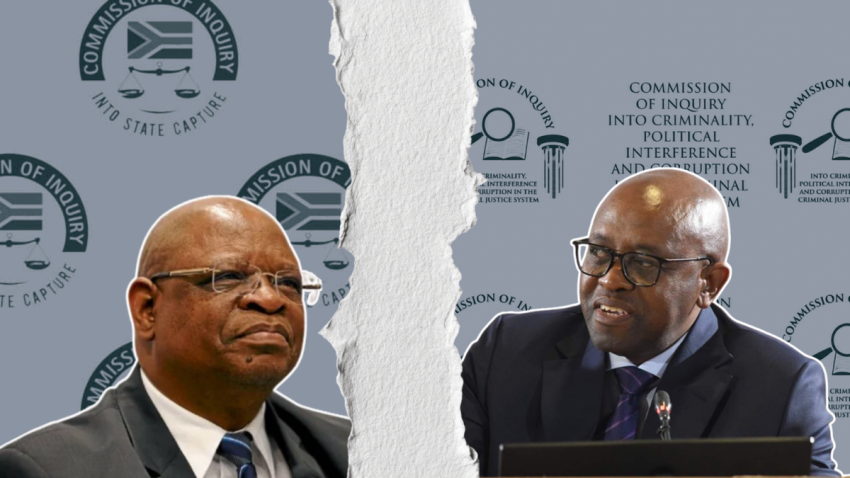
The Madlanga Commission is drawing comparisons with the Zondo Commission as analysts debate the cost, effectiveness and accountability delivered by major public inquiries in South Africa.
The Madlanga Commission was established following allegations by KwaZulu-Natal Police Commissioner Lieutenant-General Nhlanhla Mkhwanazi involving criminality, political interference and corruption in the criminal justice system.
It is frequently compared with the Zondo Commission, which investigated state capture between 2018 and 2022.
Cost of commissions under scrutiny
In September 2025, the Department of Justice and Constitutional Development estimated the Madlanga Commission’s preliminary cost at R147.8 million.
National Treasury later included that allocation in the 2025 Adjusted Estimates of National Expenditure.
IRS Forensic Investigations CEO Chad Thomas said the cost should be weighed against the need to investigate criminal networks with alleged access to senior levels of state security.
Thomas contrasted the figure with the Zondo Commission, which he said cost about R1 billion and received multiple extensions.
He argued that recovered criminal proceeds could help fund crime-fighting efforts through mechanisms including the Criminal Assets Recovery Account.
Madlanga praised for parallel action
Thomas said one key difference between the two commissions was the timing of consequences.
He said much of the action linked to the Zondo Commission followed after the inquiry, while developments connected to the Madlanga Commission were happening in parallel with its work.
According to Thomas, 99 people were before the courts in Zondo-related matters at the time of his interview.
He said President Cyril Ramaphosa had also received two Madlanga Commission reports, with a third still pending.
Analysts debate effectiveness
Nelson Mandela University political analyst Bheki Mngomezulu said he generally does not favour commissions because they cannot prosecute.
Their role is to gather evidence, produce reports and make recommendations, leaving further action to other institutions.
However, Mngomezulu said he viewed the Madlanga Commission as more effective because developments including arrests and resignations had occurred while the inquiry continued.
Political analyst Professor Sipho Seepe was also critical of the Zondo Commission and argued that Madlanga had adopted a more rigorous, evidence-focused approach.
The views reflect an ongoing debate over whether commissions of inquiry justify their costs and, crucially, whether their findings lead to meaningful accountability.