
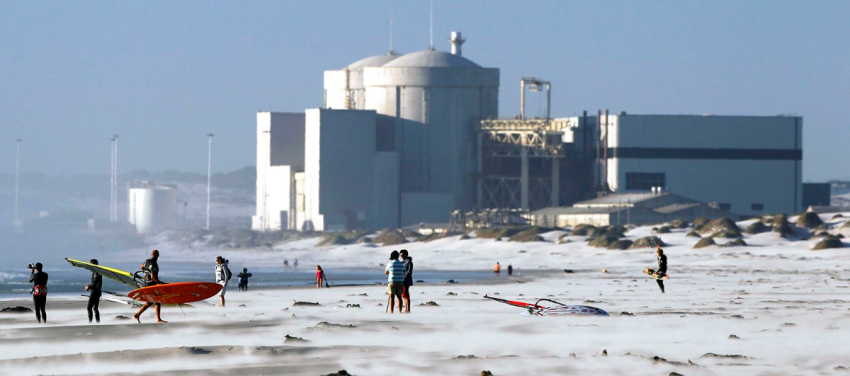
Three radioactive contamination incidents recorded at South Africa’s Koeberg Nuclear Power Station have prompted renewed scrutiny of safety procedures at the country’s only nuclear facility, even as government maintains there was never any threat to surrounding communities.
The incidents occurred during planned maintenance at Unit 2 on 30 June, 2 July and 7 July. According to Electricity Minister Kgosientsho Ramokgopa, each event was linked to a temporary loss of power that interrupted ventilation systems serving maintenance tents inside the reactor’s containment building.
The ventilation failure caused elevated levels of airborne radioactive particles within the sealed containment area where maintenance teams were working. Officials say the contamination remained confined inside the reactor building and that no radioactive material escaped into the environment.
Ramokgopa said the affected workers received only minimal radiation exposure, describing the recorded doses as well below internationally accepted occupational limits. He noted that the exposure was lower than that associated with a routine dental X-ray and comparable to everyday background radiation accumulated over a short period.

The Minister used the incidents to emphasise Koeberg’s long operational history, saying the station has maintained a strong safety record since entering service more than four decades ago. He added that Unit 2’s recently approved 20-year life extension followed extensive refurbishment work and regulatory assessments designed to ensure continued safe operation.
While acknowledging that any nuclear-related incident naturally attracts public concern, Ramokgopa argued that the recent events demonstrate the effectiveness of Koeberg’s multiple safety barriers, which prevented contamination from spreading beyond the reactor containment structure.
The developments come as South Africa advances plans to expand its nuclear generation capacity by an additional 5.2 gigawatts by 2039. Koeberg, which generates about 2 gigawatts of electricity, remains a key contributor to the national grid, with government crediting the station for helping improve electricity supply and supporting efforts to reduce load shedding in recent years.