
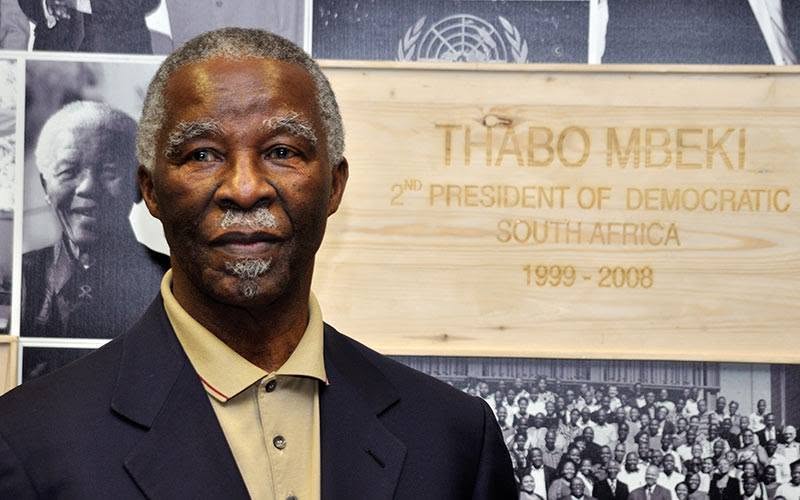
Image: Facebook / Thabo Mbeki Presidential Library
As South Africa marks former president Thabo Mbeki’s 84th birthday, many people know him as the country’s second democratically elected president. But beyond the political speeches and history books, there are several lesser-known details about the man who helped shape South Africa’s post-apartheid era.
Also see: WATCH: Thabo Mbeki hails Mkhwanazi for unmasking corruption
Born on 18 June 1942 in the Eastern Cape, Mbeki remains one of the country’s most influential political figures, even years after leaving office.
Facts about Thabo Mbeki
1. He grew up in a politically active household
Politics was part of daily life long before Mbeki entered government.
His parents, Govan and Epainette Mbeki, were both teachers and political activists. Growing up in such an environment exposed him to discussions about justice, equality and the struggle against apartheid from a young age.
2. He joined the ANC Youth League as a teenager
Many political careers start later in life, but Mbeki became involved while still in his teens.
He joined the African National Congress (ANC) Youth League at the age of 14 and quickly became active in student politics, laying the foundation for a lifelong role within the movement.
3. A student protest changed his path
One of the defining moments of his youth came while he was a student at Lovedale.
Mbeki was expelled after participating in student protest action in 1959. Rather than ending his education, the setback pushed him to complete his studies from home.
4. He spent nearly three decades in exile
Like many anti-apartheid activists, Mbeki left South Africa during the apartheid years, first heading to Botswana before settling in the United Kingdom to further his studies.
He departed the country in 1962 and spent almost 30 years abroad, working for the ANC and helping build international support for the struggle against apartheid before returning after the organisation was unbanned in 1990.
5. Economics was his field of study
Before becoming president, Mbeki studied economics at the University of Sussex, a qualification that would later influence his approach to economic policy during his years in government.
6. He was Nelson Mandela’s deputy
Before taking the country’s highest office, Mbeki served alongside South Africa’s first democratic president.
Following the 1994 elections, he became deputy president under Mandela and played a significant role in the day-to-day running of government before succeeding him in 1999.
Also see: Thabo Mbeki questions Jacobs Zuma’s time on Robben Island
7. He championed the idea of an African Renaissance
Mbeki is often associated with a vision that extended beyond South Africa’s borders.
Throughout his presidency, he promoted African development, cooperation, and stronger continental institutions. His name became closely linked to the concept of an ‘African Renaissance’ and initiatives aimed at increasing Africa’s global influence.
8. He’s known as one of South Africa’s most intellectual leaders
Books, ideas, and debate have long been central to Mbeki’s public image.
Biographical accounts note that he developed a love for reading from an early age, encouraged by a family home filled with books. Over the years, he gained a reputation as one of South Africa’s most thoughtful and policy-focused political leaders.
Thabo Mbeki’s legacy still sparks debate
Few South African leaders have generated as much discussion as Mbeki.
Supporters often point to his role in economic growth, diplomacy, and African development, while critics continue to debate aspects of his presidency, particularly his government’s approach to HIV/AIDS.
Years after leaving office, his legacy remains an important part of South Africa’s political conversation.
Also see: Son of slain struggle hero blasts Thabo Mbeki for meddling in apartheid justice case
Be the first to know – Join our WhatsApp channel for content worth tapping into. Click here to join!