
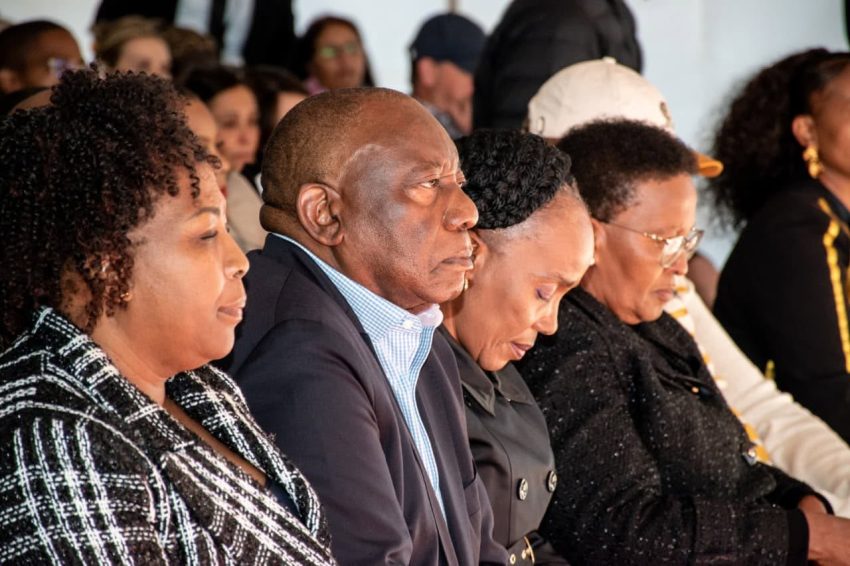
South Africa’s Youth Day commemorations on June 16 are unfolding against a backdrop of both official remembrance and political mobilisation, with President Cyril Ramaphosa leading a wreath-laying ceremony in Soweto, while Economic Freedom Fighters (EFF) leader Julius Malema addresses supporters at a rally at the Union Buildings in Pretoria.
Official Commemoration in Soweto
President Ramaphosa began the day at the Hector Pieterson Memorial in Soweto, where he took part in a wreath-laying ceremony honouring the young people who lost their lives during the 1976 Soweto Uprising. The annual ceremony remains one of the most symbolic moments of Youth Day, paying tribute to the students who protested against apartheid-era education policies.
The president was received by Minister of Women, Youth and Persons with Disabilities Sindiswa Chikunga and Gauteng Acting Premier Faith Mazibuko. The ceremony serves as a solemn reminder of the role young South Africans played in shaping the country’s democratic path.
The wreath-laying precedes the main national Youth Day commemoration at the FNB Stadium precinct in Johannesburg, marking 50 years since the historic uprising.
Malema Addresses Youth at Union Buildings
Meanwhile in Pretoria, Julius Malema addressed a gathering of EFF supporters and youth activists at the Union Buildings, using the platform to reflect on the meaning of Youth Day in present-day South Africa.
Speaking to the crowd, Malema framed the legacy of 1976 as a call to address current socio-economic challenges facing young people.
“The youth of 1976 fought for freedom and dignity. Today, the struggle continues as many young people remain without jobs and opportunities,” Malema told supporters.
He emphasised the need for economic transformation, arguing that political freedom must be accompanied by meaningful inclusion in the economy.
Malema also highlighted youth unemployment as a central issue, calling for urgent interventions to expand access to jobs and economic opportunities.
The rally, held at the seat of government, drew supporters from across Gauteng and formed part of broader Youth Day activities taking place nationwide.
Reflection and Present-Day Realities
The simultaneous events highlight the dual nature of Youth Day in modern South Africa—combining remembrance with active political and social engagement.
While the official programme focuses on honouring the sacrifices of 1976, political gatherings such as the Union Buildings rally reflect ongoing debates about the country’s future and the realities facing young people.
Youth unemployment remains one of the country’s most pressing challenges, with many young South Africans struggling to enter the labour market despite education and training. Broader concerns around inequality, crime and limited economic opportunities continue to shape public discourse.
A Legacy That Continues to Evolve
As South Africa marks 50 years since the Soweto Uprising, Youth Day remains both a symbol of past sacrifice and a moment of reflection on present challenges.
Malema’s address echoed a broader sentiment among many young South Africans—that the legacy of 1976 must now translate into tangible economic opportunities.
“The responsibility of this generation is to ensure that freedom becomes meaningful in the lives of young people today,” Malema said.
As commemorations continue across the country, attention remains focused on how South Africa can carry forward the legacy of its youth—ensuring that the promise of June 16 extends beyond remembrance to real progress for future generations.