
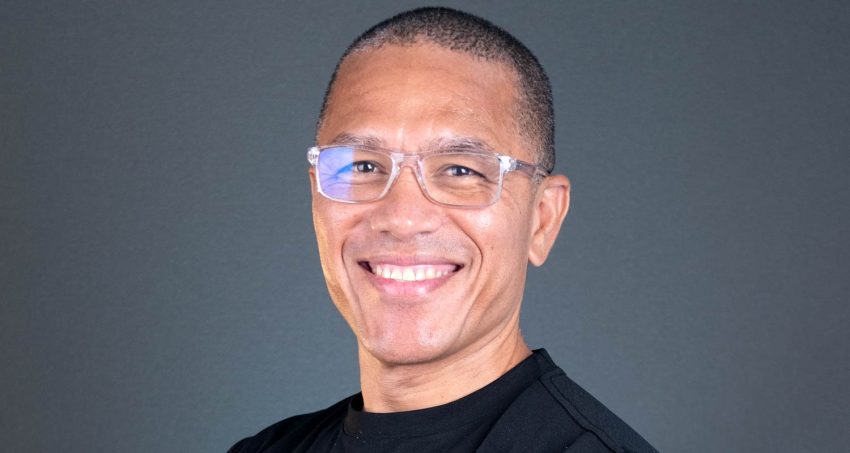
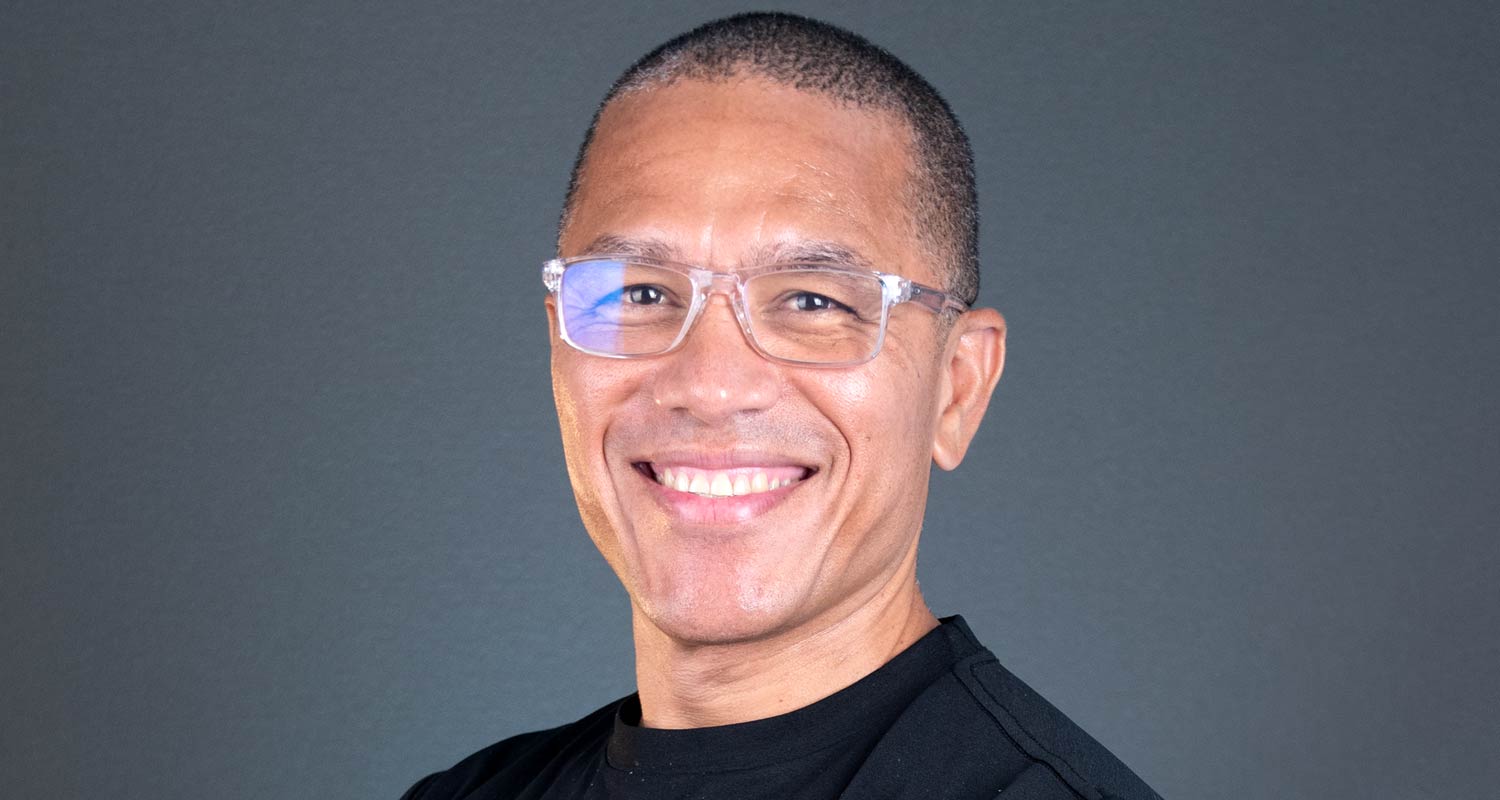
Dear minister Malatsi,
I write not as a representative of any company or institution but in my personal capacity as someone who has spent the last decade writing cheques into South Africa’s AI economy – and living with the consequences.
Over this period, I have mentored many AI-focused entrepreneurs and angel-invested millions of rand into South African AI start-ups. Two of those bets produced successful exits; three failed. The failures taught me more than the successes, because they exposed with painful clarity what actually kills AI ventures in this country: not a lack of ethics frameworks or governance committees, but the absence of affordable compute, unreliable electricity, an anaemic venture funding pipeline, and a regulatory environment that is silent on the things that matter and loud on the things that don’t.
I am also actively investing in grid-scale energy infrastructure in the context of digital infrastructure and hyperscaler compute – work that requires navigating national grid connections, municipal supply agreements, environmental approvals and water-use licences simultaneously. I advise several of South Africa’s largest enterprises on AI strategy and adoption, and I am regularly invited to speak on these subjects on global stages.
Read: South Africa’s draft AI policy is a bureaucrat’s dream
I say this not to credential myself but to make a simple point: the perspective I offer here is not theoretical. It is earned through capital at risk, infrastructure under construction, start-ups that either made it or didn’t, and many entrepreneurs needing guidance.
Very few people in South Africa hold this particular combination of lived AI experience. I believe it obliges me to be direct with you about what the draft South Africa National Artificial Intelligence Policy, gazetted earlier this month, gets wrong and what is at stake if it is not fundamentally rebalanced before finalisation.
1. This is a national security issue, not a governance exercise
Let me state this plainly: AI is not merely a technology policy matter for South Africa. It is a national security concern – right now, today.
South Africa has the highest income inequality on Earth, with a Gini coefficient of 0.67. The top 10% of earners take home 65% of all income. Youth unemployment exceeds 57% for those aged 15-24. The expanded unemployment rate, which includes discouraged workers, sits between 42% and 45%. More than 12 million South Africans are without work.
AI-driven automation is already eliminating jobs globally in precisely the sectors that employ South Africa’s most vulnerable workers: retail, financial services, logistics, basic manufacturing and call centres. If this country does not position itself as a builder and deployer of AI, rather than merely a consumer of AI products built elsewhere, the labour market impact will be catastrophic. In a society already this unequal, mass displacement of low- and mid-skilled workers without a corresponding AI-driven job creation engine is not an economic adjustment. It is a social detonation.
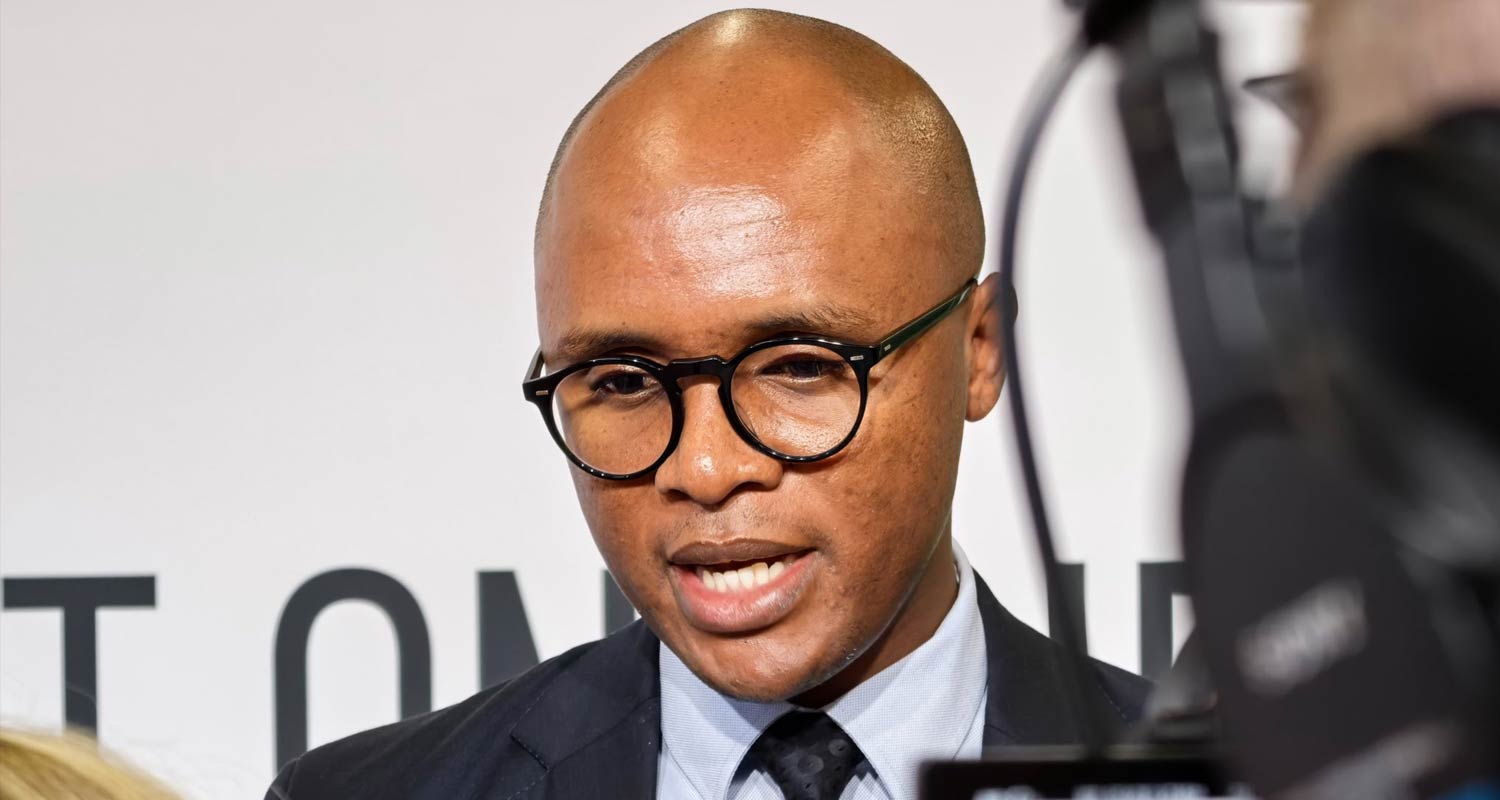
The draft policy mentions job displacement in passing and proposes reskilling programmes as the remedy. This fundamentally understates the scale and urgency of the threat. The correct response is not to reskill people for jobs that may no longer exist; it is to ensure that South Africa is where AI companies build, train, deploy and employ. That requires infrastructure, incentives and speed. It does not require seven new government bodies.
2. This policy regulates a vacuum
The draft proposes establishing seven new institutional bodies: a National AI Commission, an AI Ethics Board, an AI Regulatory Authority, an AI Ombudsperson Office, an AI Insurance Superfund, a National AI Safety Institute and an Integrated AI-Powered Monitoring Centre.
Seven new institutions – before a single rand of public money has been committed to compute infrastructure, before a single regulatory sandbox has processed its first application and before the country has answered the most basic question any AI economy must answer: where will the electricity come from?
I have watched AI start-ups I’ve advised or funded struggle not because of ethical ambiguity but because they could not access affordable GPU time. I have watched founders relocate to the Netherlands, the UAE, the US – even Rwanda – not because South Africa lacked an ethics board but because those countries offered compute credits, co-investment and a clear signal that they wanted the business. This policy, in its current form, would add compliance cost to an ecosystem that barely exists while offering nothing concrete to help it grow.
You cannot govern what you have not built. The correct sequence, demonstrated by every country that has successfully attracted AI investment, is infrastructure and incentives first, governance second – or in parallel. Not because governance doesn’t matter, but because governance without an ecosystem to govern produces only bureaucracy.
3. Our energy grid is not just a problem – it is our greatest opportunity
Section 9.1.2 of the draft mentions “energy preparedness for the AI age” as a single bullet point. This is not a bullet-point issue. It is the issue. But the draft’s framing of energy as a constraint misses the extraordinary opportunity staring us in the face.
As of April 2026, South Africa has gone more than 300 consecutive days without load shedding. Eskom entered 2026 with 4.4GW more available capacity than the prior year. Peak demand in March 2026 was approximately 26.5GW against available capacity regularly exceeding 28GW, with nearly 4GW held in cold reserve due to excess supply. Electricity demand continues to decline structurally as industrial consumers move to self-generation and rooftop solar reshapes the residential demand curve. The duck curve – the midday collapse in grid demand driven by solar generation – is now a measurable reality in South Africa, particularly in the Western Cape and Gauteng. We are generating more power than we can consume.
Read: Draft AI policy: South Africa ‘too dependent’ on US, China
This is the single most important fact that should be driving AI infrastructure policy in South Africa. We have surplus electricity at precisely the moment when the rest of the world is desperate for it. In the US, between 30% and 50% of all data centres planned for 2026, representing approximately 16GW of capacity, face delays or outright cancellation, primarily because of power grid constraints and equipment shortages. Alphabet, Amazon, Meta and Microsoft are spending more than US$650-billion (R11-trillion) this year on AI infrastructure – and they are literally running out of places to put it. Transformer lead times in the US have stretched to five years. Local opposition to data centre development is mounting across North America and Europe.
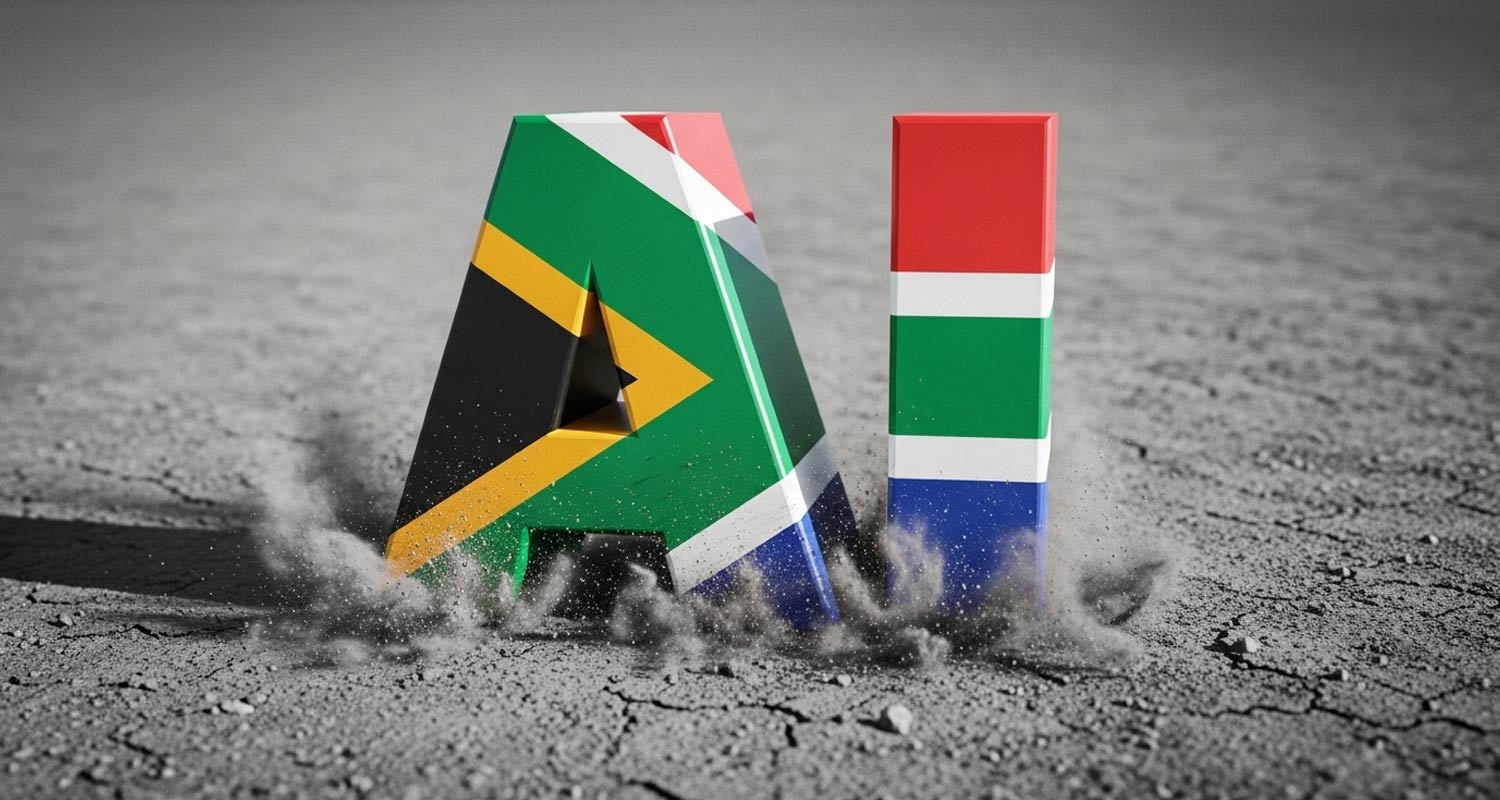
South Africa could absorb a meaningful share of that displaced demand if we act now. Our surplus generation, abundant renewable energy potential, strategic time zone position between Asia and the Americas, and subsea cable connectivity make us a viable destination for hyperscaler compute. But capturing this requires a deliberate national strategy: dedicated energy allocation frameworks for data centres, streamlined permitting, wheeling agreements and self-generation provisions that work. The draft policy contains none of this.
If the minister asked me today where to build a 50MW AI compute facility, my honest answer would be that the regulatory and energy environment makes it easier to build it elsewhere. That should alarm everyone involved in drafting this policy, because it means we are squandering an advantage that is time-limited. As Eskom’s coal fleet ages and demand eventually finds equilibrium, the surplus window will close.
4. The incentive architecture is empty
The policy references tax breaks, grants and an “AI Innovation Fund” without specifying a single mechanism. There is no R&D tax credit schedule. There are no matching-fund ratios. There are no special economic zone provisions for AI or data centre clusters. There is no compute credit programme for start-ups or researchers. There is no discussion of exchange control reform to allow South African AI companies to raise capital internationally or repatriate earnings without punitive friction. There is nothing that would incentivise a company like Nvidia to invest in South Africa at meaningful scale – and that absence alone could define whether this country participates in the AI economy or watches from the sidelines.
When I invest in a South African AI start-up, that founder faces a cost-of-compute disadvantage against competitors in jurisdictions that subsidise cloud access. They face an exchange control regime that treats outward investment as suspicious. They face a venture capital market that is shallow and risk-averse precisely because government has created no instruments to de-risk early-stage AI investment. The Singapore and Canadian examples the draft itself cites are instructive precisely because they highlight the gap: those countries deployed actual capital with clear eligibility criteria. This draft promises the concept without building the instrument.
5. The talent haemorrhage is already a crisis
The draft policy discusses “strategic talent retention” as a future initiative. It is not a future problem. It is a current emergency. More than 70 skilled South Africans leave the country every day. A World Bank survey found that only 31% of African universities offer dedicated AI programmes. An estimated 38% of African developers already work for at least one foreign company. The AI engineers, ML researchers and data scientists that South Africa produces are being recruited – aggressively and successfully – by jurisdictions that offer them compute access, career trajectory and an economic signal that their work is valued.
Every month without concrete action, the talent base erodes further. This is not a workforce development problem to be solved by future curricula changes. It is a retention emergency that requires immediate economic signals: competitive research grants, compute access, visa facilitation for returning diaspora talent and the creation of an environment where building an AI company in Johannesburg or Cape Town is a rational economic choice rather than an act of patriotic sacrifice.

6. Africa is the market – and the window is closing
The draft policy talks about continental AI leadership in aspirational terms. But the concrete opportunity is more specific and more urgent: South Africa could be the AI services hub for a continent of 1.4 billion people. The African Continental Free Trade Area creates the trade framework. What is missing is the compute substrate.
Nigeria, Kenya, Egypt and Rwanda are all moving. Kenya has announced a billion-dollar AI investment plan that includes local data centres. Egypt graduated 1 300 AI trainees in a single cohort in 2025. Rwanda has positioned itself as a regulatory-light destination for tech companies. South Africa’s window as the continent’s AI gateway – leveraging our financial infrastructure, legal system, university network and connectivity – is closing with each month of inaction. An 86-page governance document does not hold that window open. Deployed infrastructure does.
7. Open-source AI is a strategic asset this policy ignores
The draft mentions open-source tools in passing but misses their strategic significance for a cost-constrained economy like South Africa’s. Open-weight models – Llama, Mistral, DeepSeek, Kimi and their successors – allow local fine-tuning, local deployment and local data sovereignty without dependence on US hyperscaler APIs. For a country rightly concerned about data sovereignty and colonial-era data extraction, this is not a technical footnote. It is the answer.
Policy should actively incentivise local deployment of open-weight models on domestic infrastructure. This means compute subsidies for South African organisations running inference locally rather than paying per-token to offshore providers. It means supporting the development of locally fine-tuned models for indigenous languages, agricultural extension, healthcare triage and government services. It means treating open-source AI as a strategic sovereign capability, not an afterthought in a paragraph about technology neutrality.
8. What the policy gets right
The draft is not without merit, and I want to be clear about what should be preserved and amplified.
The sector-specific working group model is the right architecture. The emphasis on local data collection and Africa-relevant datasets is strategically correct and commercially valuable. The commitment to digitising and preserving indigenous languages using AI is a genuinely distinctive South African contribution that no other country is better positioned to deliver. The ubuntu framing, if taken seriously rather than decoratively, could ground AI governance in a philosophical tradition more humane than the utilitarian calculus that dominates Western AI ethics. And the explanatory note’s honest acknowledgement that this is a “work in progress” is welcome. I take the department at its word.

9. Seven recommendations from the field
These are not theoretical proposals. They are drawn from what I have seen work, what I have seen fail, and what founders and investors in this ecosystem actually need.
- First, declare AI infrastructure a national strategic priority. Frame it alongside energy security and job creation. Commit in year one to a national AI infrastructure plan with measurable targets: petaflops of compute available domestically, megawatts ring-fenced for data centre operations, and connectivity to designated AI development zones.
- Second, capture the energy surplus before it closes. Work with the department of mineral resources & energy to publish a data centre energy allocation framework within year one. Include wheeling, self-generation and dedicated renewable procurement provisions. Position South Africa as a destination for the US and European hyperscaler capital that cannot find power at home.
- Third, build real incentive instruments. Table a draft AI investment incentive regulation within 12 months. Specify R&D tax credits, compute subsidies for start-ups and universities, accelerated depreciation for AI-related capital expenditure, and special economic zone designations for data centre clusters. Create the conditions that would make a company like Nvidia choose South Africa.
- Fourth, consolidate the institutions. Replace the seven proposed bodies with a single National AI Office reporting directly to the minister, supported by lean advisory committees. Fund it with a ring-fenced budget. Staff it with people who have actually built and shipped AI products, not only people who have studied them.
- Fifth, launch an emergency talent retention programme. Competitive research grants, compute access for university labs, diaspora return incentives and the creation of a signal – economic and cultural – that South Africa values its AI builders and wants them to stay.
- Sixth, make open-source AI a strategic pillar. Subsidise local deployment of open-weight models. Fund fine-tuning for indigenous languages and priority public services. Reduce API dependency on offshore providers as both an economic and a sovereignty measure.
- Seventh, measure what matters. The draft contains no quantified targets. Commit to specifics: AI start-ups receiving government-backed support by 2028, total venture capital deployed, regulatory sandbox approvals processed, citizens completing AI literacy programmes and data centre capacity online. What gets measured gets managed. What gets left vague gets forgotten.
Minister Malatsi, South Africa has a narrow window. The global AI infrastructure build-out is happening now. Capital is being deployed, talent is being recruited and supply chains are being secured. The US alone is failing to deploy half its planned data centre capacity because it cannot find the power. We have the power. We have the location. We have the talent – for now.
Countries that move decisively on infrastructure and investment incentives in the next 24 months will participate in this economy. Countries that spend those 24 months designing ethics boards and ombudsperson offices will find, when they finally look up, that the race has been run without them.
I have put my own money where my conviction is, repeatedly, in this country, in this sector. I have earned the right to say that this draft, while well-intentioned, does not yet reflect the urgency or the commercial reality of the moment. It reads like a document written by people who study AI, not by people who build it, fund it and fail at it.
In a country with the highest inequality on Earth and unemployment that constitutes a permanent social crisis, getting AI policy wrong is not an abstract risk. It is a path to deeper poverty, accelerating brain drain and permanent relegation to the margins of the global digital economy. Getting it right – infrastructure first, incentives second, governance third – could be transformative.
Read: Cabinet approves draft AI policy for public comment
This policy attempts to govern an AI economy that South Africa has not yet built and risks regulating away the very conditions required to create it. South Africa will not regulate its way into the AI economy. It must build its way into it.
I respectfully urge the department to use the public comment period to fundamentally rebalance this draft. I am available to engage further on any of these points.
Yours faithfully,
Stafford Masie
AI investor, infrastructure builder and advisor, Johannesburg
Author’s note: This open letter has been published in the public interest and submitted to the department of communications & digital technologies in response to the invitation for public comment on the draft South Africa National Artificial Intelligence Policy, Government Gazette No 54477, Notice 3880 of 2026. The deadline for public submissions is 10 June 2026.
Get breaking news from TechCentral on WhatsApp. Sign up here.