
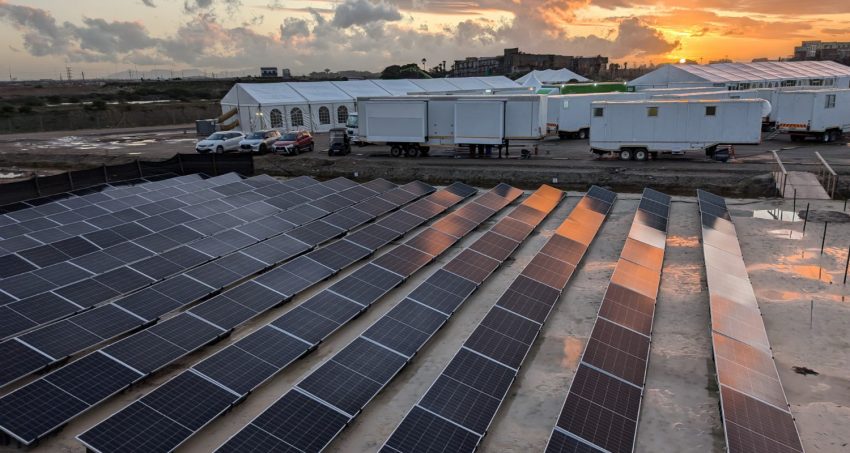
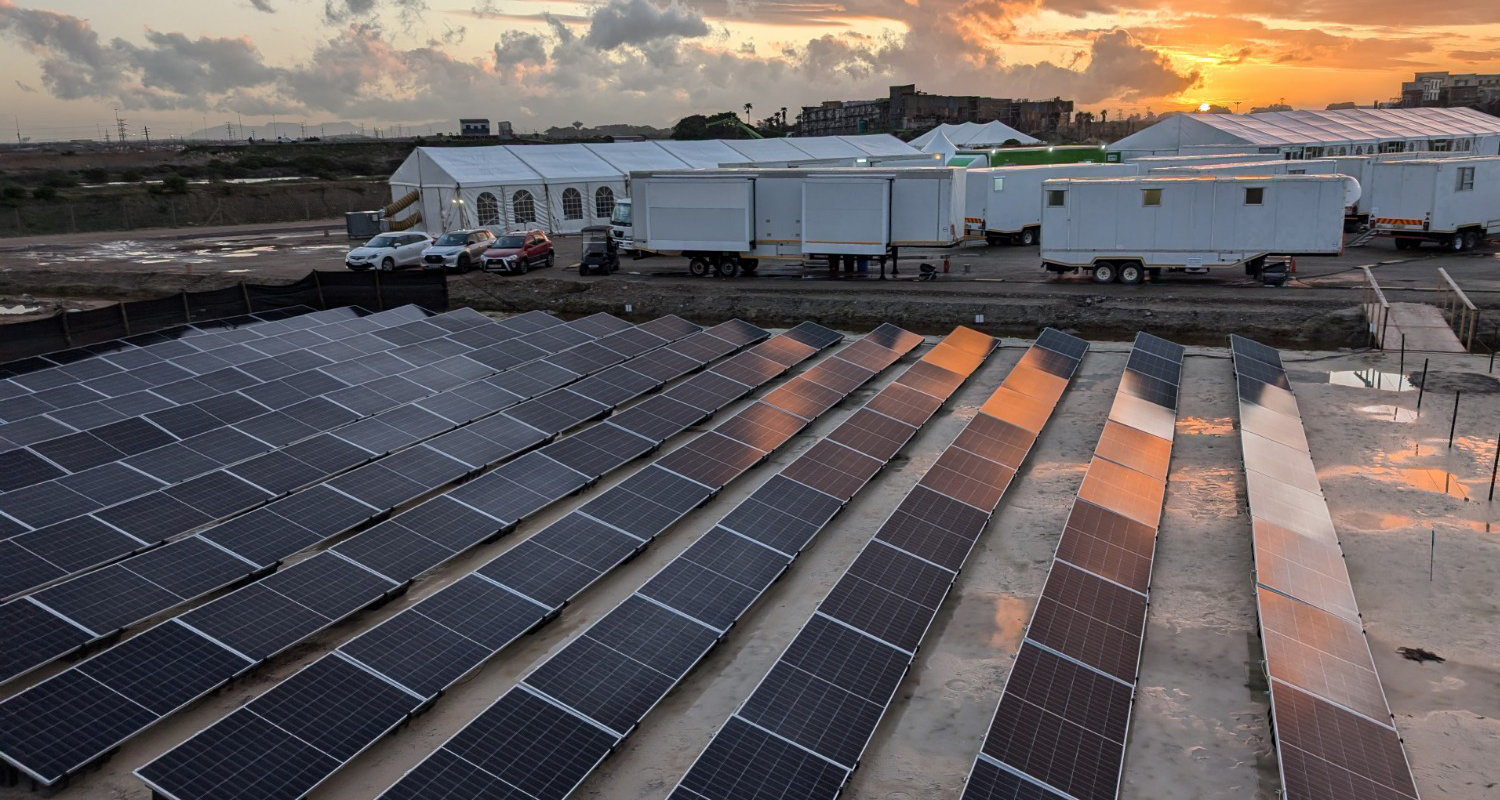
A Cape Town start-up has powered an entire Netflix production base camp on the sun for six months, with no diesel generator running the main site – and at roughly the same cost as renting a conventional generator.
Cinergy Mobile Power deployed its CineRay solar array and CineVault battery system at Cape Town Film Studios for 24 weeks during a recent Netflix shoot for season 2 of One Piece. A second deployment, using a CineSprint mobile battery and a CineRay array, ran an off-site construction location for eight weeks.
Together, the two systems avoided about 93 tonnes of CO₂ emissions, according to data from Skoon, a Dutch software platform that creates a digital twin of each deployment and models what a diesel generator would have consumed under the same conditions.
Co-founder Abe Cambridge, who has spent nearly two decades installing solar systems for schools, farms and commercial buildings, set up Cinergy three years ago after spotting a gap in the market.
“There was a whole industry that has a massive energy footprint but has struggled to decarbonise because they’re fully mobile and transient,” he told TechCentral in an interview.
Cinergy’s answer is a rental model built around how productions already operate. Systems are deployed within hours, monitored remotely for the duration of a shoot and removed when filming wraps. Nothing permanent is left behind. After a Netflix construction site on the West Coast wrapped, Cinergy packed down the system, drove it to Somerset West and had it deployed again within two hours.
Prediction modelling
The hardware comes from South African battery manufacturer Freedom Won. A solar forecasting tool feeds weather, location and seasonal data into Skoon’s battery management platform, which runs 24-hour-ahead predictions and models when the battery will need support.
“We use AI to do the solar prediction so we can forecast and put in vast amounts of data into what the solar conditions might be moving forward,” Cambridge said. The system can predict almost to the hour when a backup generator might need to kick in.
Read: Rowboats and solar panels: the reality of connecting rural Africa
The base camp system at Cape Town Film Studios was installed in July 2024, in the middle of winter. Cinergy deliberately sized the battery for that worst-case scenario. In summer the array was oversized, but the production was shooting nights as well as days, sometimes running two units simultaneously, and the extra capacity kept the battery charged deep into the evening.
On price, Cambridge is straightforward: renting a Cinergy system costs roughly the same as hiring a diesel generator. Solar generation is cheaper than diesel fuel, there are no maintenance shutdowns – diesel generators need oil and filter changes roughly every 250 hours – and because the systems are silent they can sit closer to where power is needed, cutting cabling runs and crew time.
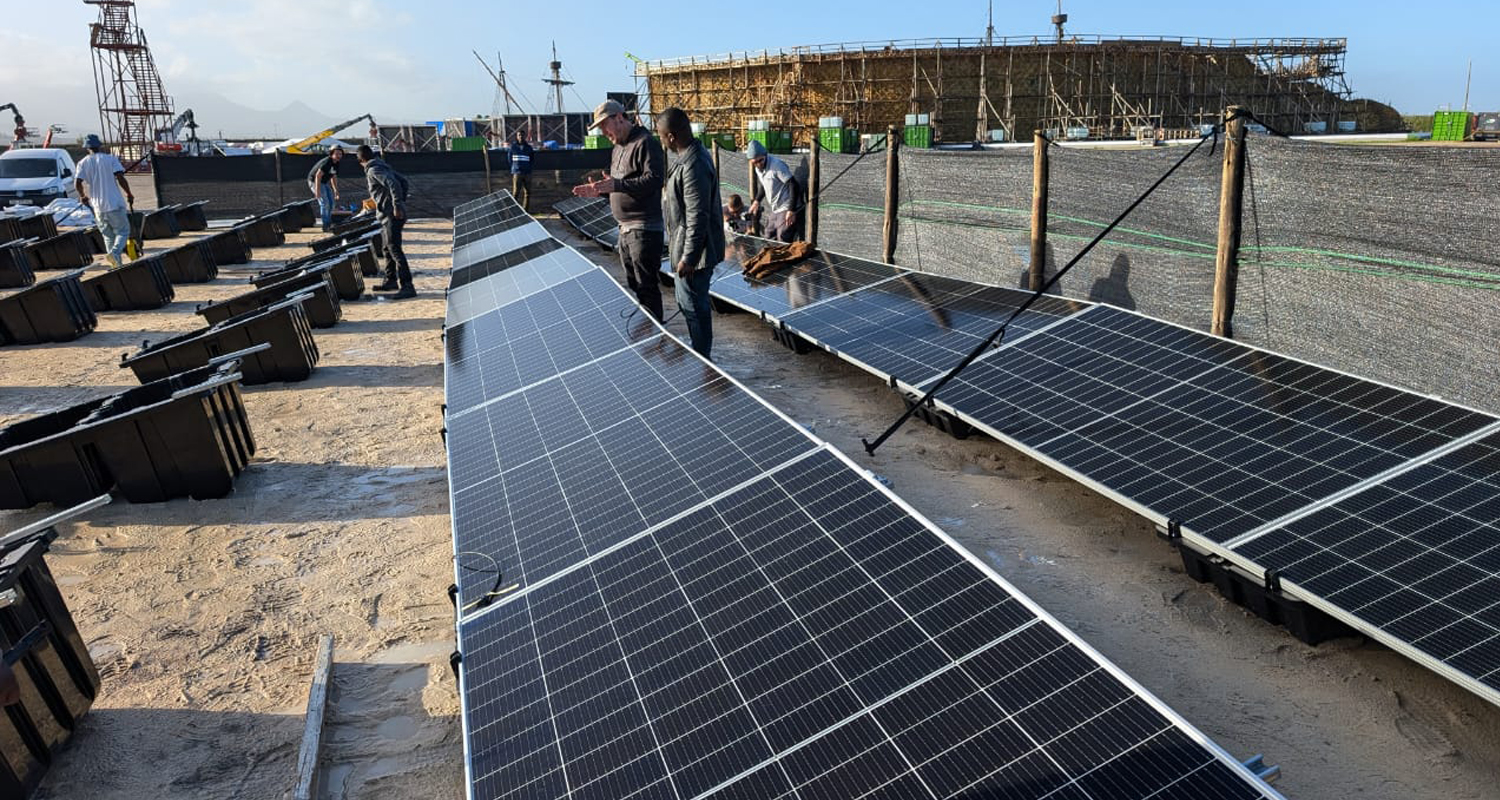
The pitch does not always land. Some productions have passed because they encountered the technology too late in the planning process. “Introducing a new variable at the last minute sometimes caused a bit too much nervousness,’ Cambridge said. Space is another constraint – solar arrays need room – and battery confidence is a subtler problem in a market with low electric vehicle penetration.
Cinergy keeps a diesel generator on standby during early deployments, which productions tend to drop as they gain experience. A shoot in the Cederberg last year ran entirely on solar with no diesel backup at all.
The hardest people to convince are the unit managers and on-site energy coordinators whose jobs depend on power not failing. “Those are the guys we have to work with carefully to make sure they know how systems work,” Cambridge said.
Cinergy runs eight to nine productions per season, with credits including Netflix, ITV Studios and AfrikaBurn. It recently completed its first project outside South Africa, a feature film in Ghana, where Cambridge said the case for clean mobile power was even stronger because fuel supply is less reliable.
The company is also moving into outdoor music events. It powered the Sanctum event (LINK HERE) off battery for 12 hours and ran the three-day Summer Camp festival on battery and solar – and is targeting agriculture, where seasonal irrigation is typically met by diesel generators running for weeks at a time.
Read: Sola Group starts work on SA’s first solar-and-battery wheeling plant
Netflix has set itself a target of net-zero carbon emissions by 2030. Cambridge does not know whether the streaming giant formally required clean energy on the Cape Town shoot, or whether local production company Film Africa and sustainability partner Greenset made the call themselves. What he does know is that when the proposal landed at Netflix, it was approved. – (c) 2026 NewsCentral Media
Get breaking news from TechCentral on WhatsApp. Sign up here.