
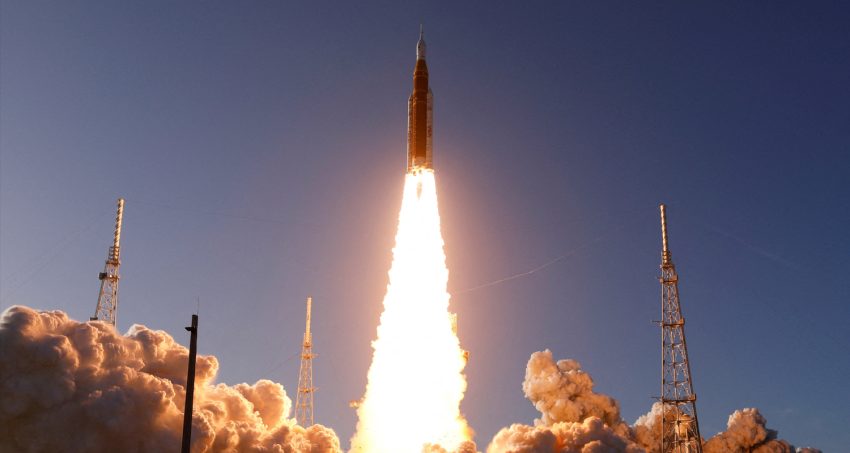
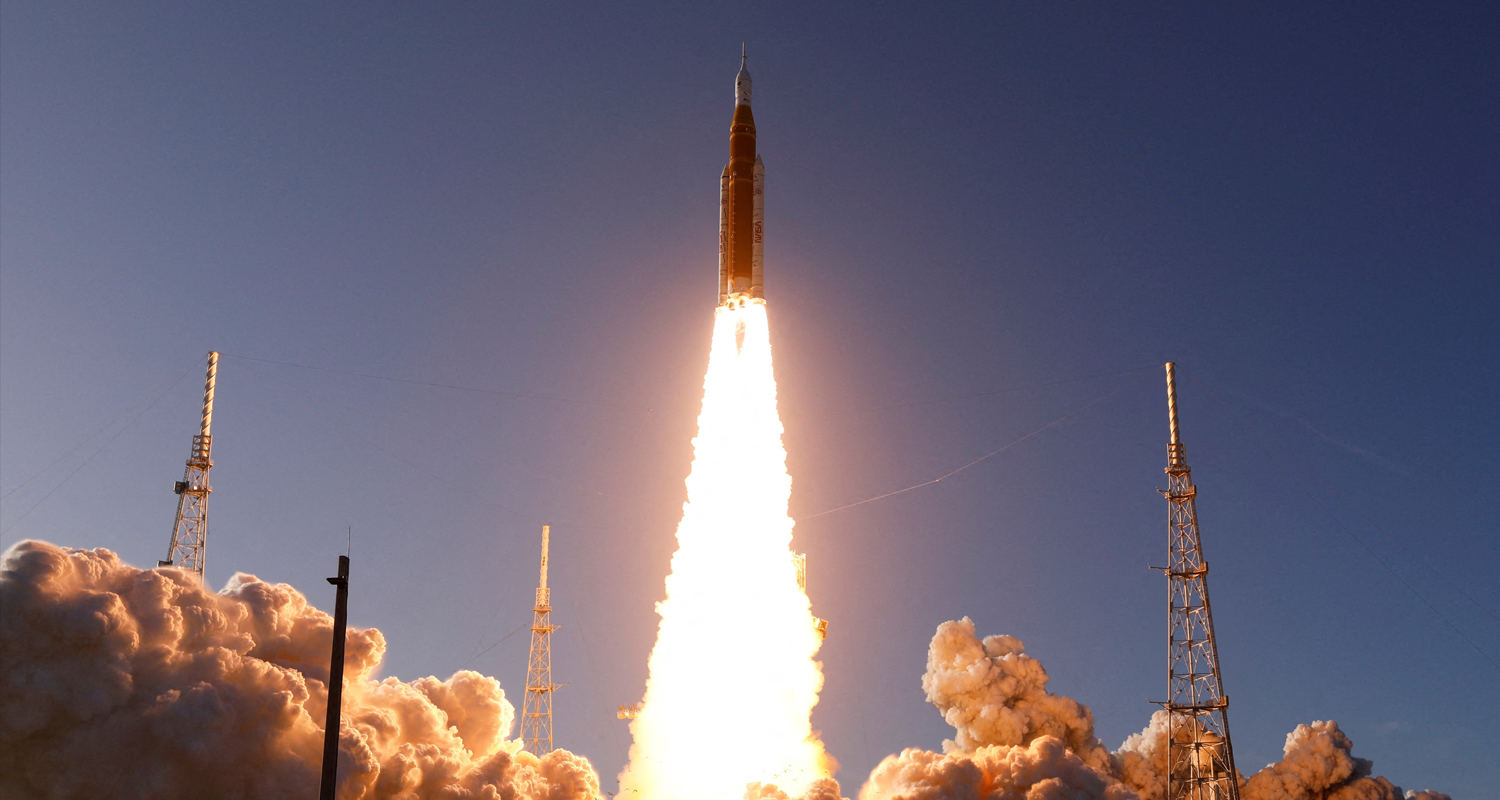
Four astronauts blasted off from Florida on Wednesday on Nasa’s Artemis II mission, a high-stakes voyage around the moon that marks the US’s boldest step yet towards returning humans to the lunar surface later this decade in a race with China.
Nasa’s Space Launch System (SLS) rocket, topped with its Orion crew capsule, roared to life just before sunset at the agency’s Kennedy Space Centre in Cape Canaveral, Florida, carrying its debut crew — three US astronauts and a Canadian astronaut — into Earth orbit. The 32-storey-tall space vehicle thundered into clear skies trailing a towering column of thick, white vapour.
Nasa administrator Jared Isaacman said the launch was an opening act for subsequent missions that would include construction of a moon base to support the “enduring presence we’re trying to create on the surface”.
If the mission proceeds as planned, the crew consisting of Nasa astronauts Reid Wiseman, Victor Glover and Christina Koch, plus Canadian Space Agency astronaut Jeremy Hansen, will fly around the moon and back in their nearly 10-day expedition, putting the spacecraft through its paces while venturing deeper into space than humans have ever gone.
The mission is the debut crewed test flight in the Artemis programme, successor to Nasa’s Cold War-era Apollo project, and the world’s first to send astronauts in the vicinity of the moon, out of Earth’s orbit, in 53 years.
Race with China
It serves as a crucial dress rehearsal for a Nasa bid to land humans on the lunar surface later this decade, after one more crewed mission around the moon. Nasa is targeting 2028 for Artemis IV, a first-ever landing of astronauts on the moon’s south pole, seeking to beat China’s planned crewed mission to the same lunar region as early as 2030.
The last time astronauts walked on the moon — a feat so far achieved only by the US — was the final Apollo mission in 1972.
Read: Nasa astronauts head home on SpaceX capsule
After nearly three years of training, the crew is the first to fly in Nasa’s Artemis programme, a multibillion-dollar venture established in 2017 to build up a long-term US presence on the moon over the next decade and beyond, serving as a stepping stone to eventual missions to Mars.
Minutes before lift-off, Canadian astronaut Hansen, strapped inside the gumdrop-shaped Orion capsule, told mission control in Houston: “This is Jeremy, we are going for all humanity.”
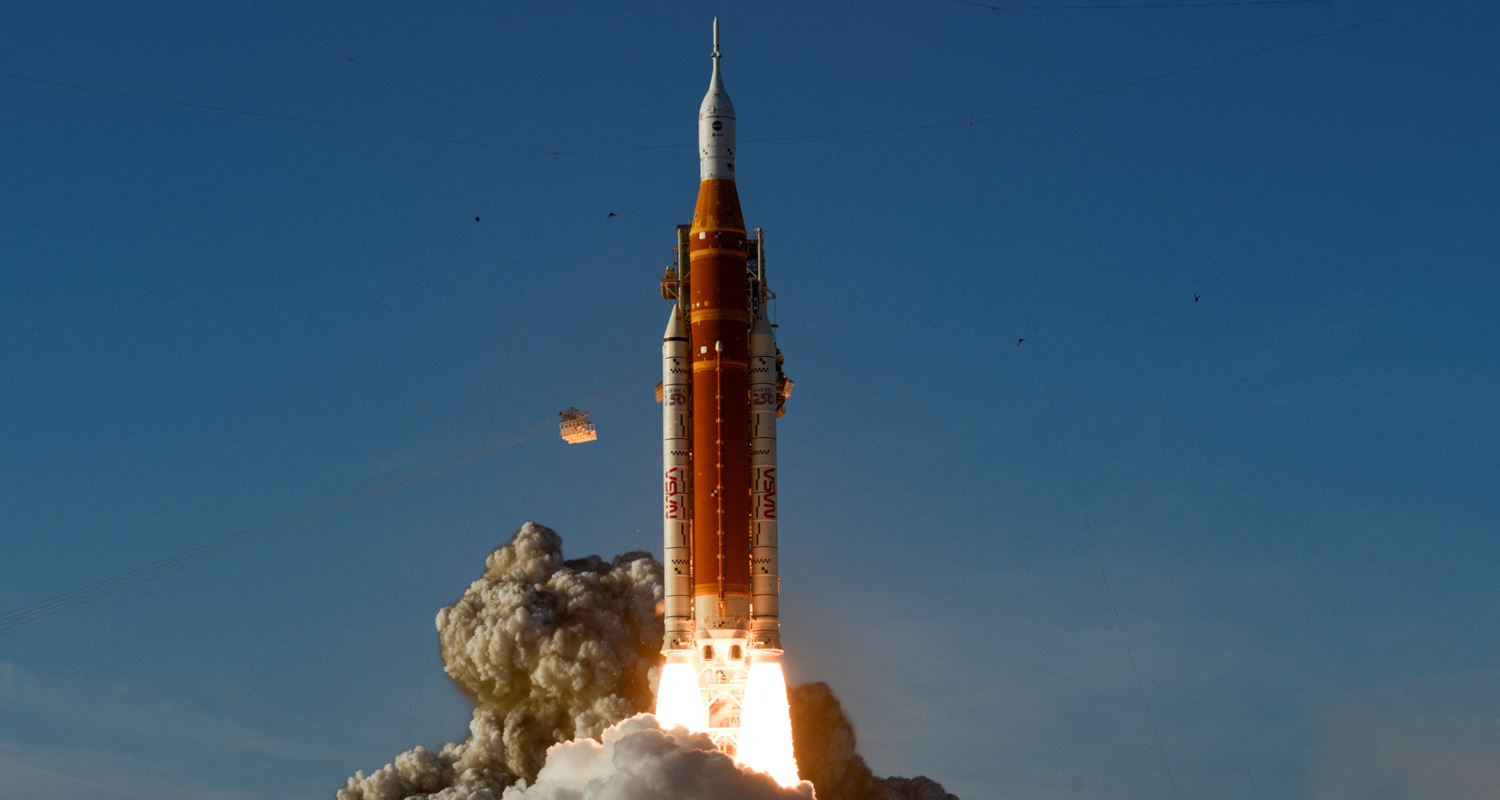
Launch director Charlie Blackwell-Thompson said: “Reid, Victor, Christina and Jeremy, on this historic mission you take with you the heart of this Artemis team, the daring spirit of the American people and our partners across the globe, and the hopes and dreams of a new generation.”
“Good luck, godspeed, Artemis II. Let’s go,” she added.
A few hours after lift-off, the SLS rocket’s upper stage successfully separated from the Lockheed Martin-made Orion capsule and its propulsion module. The crew then began work on an early test objective: manually steering the spacecraft around the upper stage to demonstrate its manoeuvrability, should its default automated controls ever fail.
Wednesday’s launch was a major milestone more than a decade in the making for the US space agency’s SLS rocket, handing its principal contractors Boeing and Northrop Grumman long-sought validation that the launch system was ready to safely loft humans into space. Nasa has increasingly relied on newer, cheaper rockets from Elon Musk’s SpaceX and others to send astronauts to low-Earth orbit.
The success of the Artemis II flight so far provided positive talking points for a space agency that lost roughly 20% of its workforce under the Trump administration’s federal downsizing efforts last year.
The Artemis II mission will send its four-person crew some 406 000km into space, the furthest humans have ever travelled.
Greater test
The current record for the farthest spaceflight at roughly 399 000km is held by the three-man crew of the Apollo 13 lunar mission in 1970, which was beset by technical problems after an oxygen tank exploded and was unable to land on the moon as planned.
Nasa launched its first Artemis mission without crew in 2022, sending the Orion spacecraft on a similar path around the moon and back.
Read: South African astronomers join forces with Nasa to study Pluto
Artemis II will pose a greater test of Orion as well as the SLS rocket, a programme partly known for its ballooning costs at an estimated US$2-billion to $4-billion per launch.
Musk’s SpaceX and Jeff Bezos’s Blue Origin are racing to develop the landers that Nasa will use to put its astronauts on the lunar surface.
Artemis III had been set to be the agency’s first astronaut moon landing, but new Nasa administrator, Isaacman, in February added an extra test mission before the landing. — Joey Roulette and Steve Gorman, (c) 2026 Reuters
Get breaking news from TechCentral on WhatsApp. Sign up here.