


Investing in digital infrastructure, particularly fibre broadband, could help South Africa ease long-term fiscal pressures by reducing costs in education, healthcare and public services.
That’s the view of Vuyani Jarana, founder and CEO of Ilitha Telecoms, a company focused on deploying broadband in underserviced areas in South Africa. Jarana – a former CEO of Vodacom Business and South African Airways – said the country’s connectivity problem is no longer only digital but economic, too.
Speaking to TechCentral in an interview this week, Jarana said South Africa’s high mobile coverage masks a deeper issue. “We are connected on paper, but not meaningfully connected,” he said. “If people cannot afford to use the internet, or the quality is too poor to support work, learning or services, then access does not exist.”
South Africa has near-universal mobile coverage and widespread smartphone adoption. Yet for millions of households, reliable internet access remains unaffordable. Data costs are high, connections are unstable and usage is rationed. Jarana argued that this limits economic participation and drives up long-term costs for the state.
Ilitha Telecoms was founded to focus on closing the persistent connectivity gaps. The company focuses on fibre broadband in townships and underserved urban areas often ignored by traditional network operators. Access is provided on a prepaid basis, with residents buying connectivity daily, weekly or monthly.
‘Fractional use’ model
Customers choose how many devices to connect. Jarana refers to this as a “fractional use” model that removes long-term contracts and high upfront fees, opening fixed broadband to households without stable monthly incomes.
Jarana challenged headline connectivity statistics that suggest around 80% of South Africans have internet access. “Access without quality delivers little value,” he said. “That’s why we talk about meaningful connectivity.”
TCS | Alan Knott-Craig unveils Fibertime’s big bet on township fibre
Meaningful connectivity, according to Jarana, requires three elements:
- Access must be available where people live;
- Speeds must support modern applications; and
- Prices must allow regular use without fear of running out of data.
“If you remove one of these, the system fails,” he said.
Speed remains central. Jarana said connections below 20Mbit/s – both upload and download – are insufficient to meet modern household demands. Video calls, online learning, remote work and cloud services all require stable bandwidth. Mobile networks, he argued, face physical limits and pricing pressure, particularly in dense townships and rural areas.
“Coverage exists,” he said, “but quality does not keep pace with demand.”
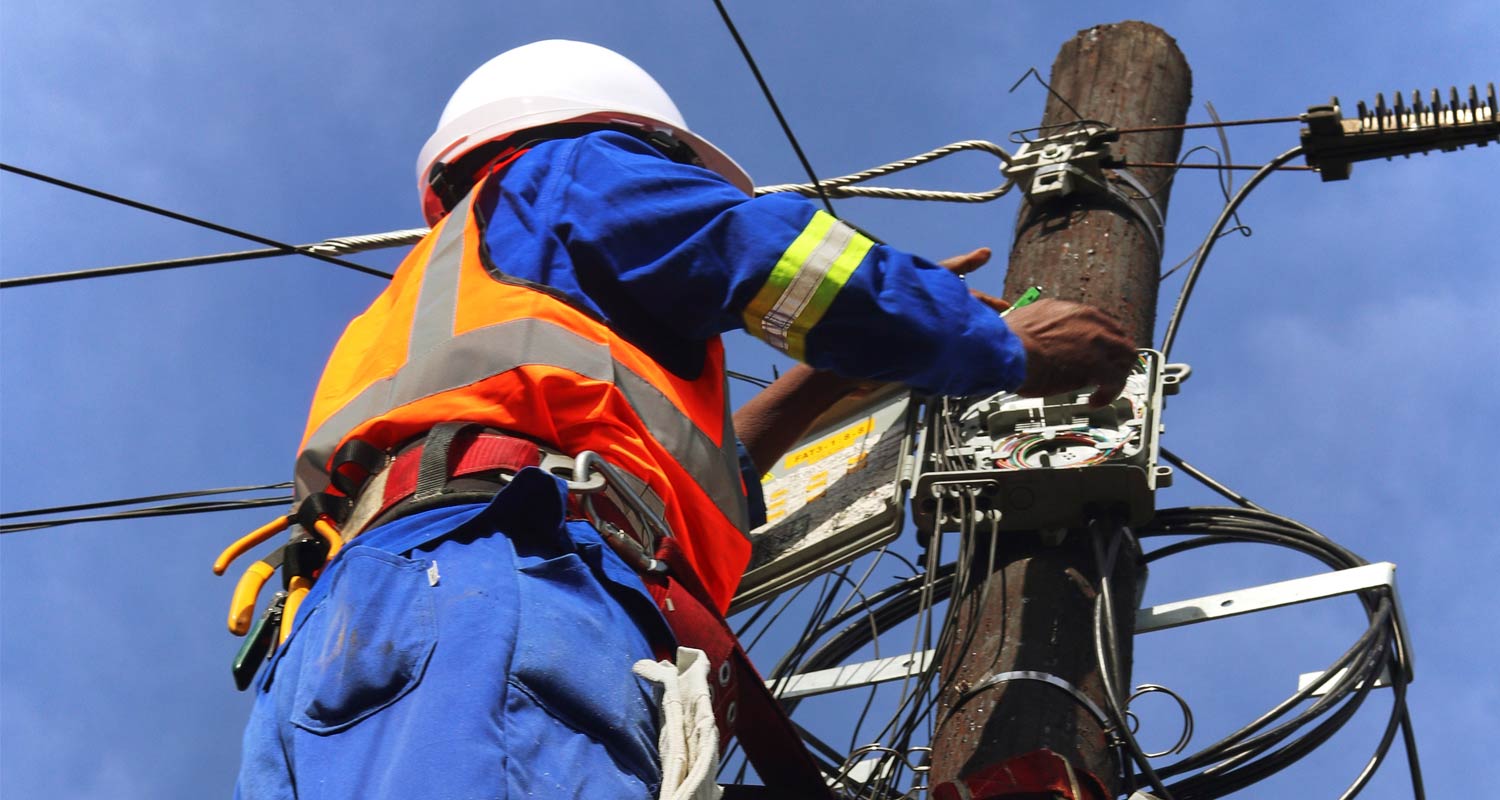
Jarana said fibre is the only technology capable of closing this gap at scale, offering higher capacity, stability and lower long-term costs than mobile networks.
This thinking underpins Ilitha’s business model. By rolling out fibre at scale and removing contract barriers, the company aims to make fixed broadband accessible to communities historically excluded from it.
The impact goes beyond entertainment. Jarana said residents in connected wards increasingly request proof of fixed broadband for job applications. Employers now require reliable home internet for many remote roles. Broadband has shifted from a convenience to a requirement for participation in the modern economy.
Education is a key part of this shift. Demand for higher education continues to rise, while physical university capacity remains constrained. Jarana said digital universities offer a viable alternative to costly campus expansion.
Healthcare
A similar logic applies to healthcare. Digital consultations with doctors reduce travel, lower overheads and shorten waiting times. Jarana said this brings care closer to homes while easing pressure on clinics and hospitals. “Connectivity becomes part of the health infrastructure,” he said, “not just a consumer service”.
These shifts carry fiscal implications. Education and healthcare account for a large share of government spending. Jarana said digital delivery lowers long-term costs while expanding reach. “The investment you make today reduces expenditure over time,” he said. Fibre, in this view, becomes a tool to manage fiscal pressure.
Read: Maziv eyes massive fibre expansion into rural South Africa
Rural areas remain the toughest challenge to get right given the costs of deployment. Many rural towns lack nearby internet points of presence, making rural backhaul expensive. Private providers struggle to justify these investments given limited short-term returns.
Ilitha tested rural clusters and found, unsurprisingly, that roll-out costs determine feasibility. Network design, supply chains and scale matter more than income levels alone. Single truck-roll installations reduce costs, but rural deployment remains difficult without structural support.

And here Jarana said government has a role to play. The state owns a nationwide network of institutions, including schools, clinics and police stations. Connecting these sites with high-capacity fibre would create a local internet presence, which private companies could then use to extend last-mile services to surrounding communities at lower cost.
This approach sits at the heart of government’s SA Connect programme. National policy already supports infrastructure sharing and open access. Jarana said the weakness lies in execution, not design. Municipal adoption varies widely. “We need delivery, not new frameworks.”
Ilitha is not the only company trying to figure out the right business model to connect township and rural communities.
Vumatel, for example, has built open-access fibre infrastructure passing more than two million homes across cities, suburbs and townships, including Soweto and Umlazi, and is now almost exclusively focused on deploying fibre into more underserviced parts of South Africa.
At the same time, companies like Fibertime and Wire-Wire Networks are expanding fibre in township communities using low-cost, pay-as-you-go models.
Fibertime offers unlimited fibre products from R5/day and has deployed networks in more than 50 townships across seven provinces. According to development financier Finnfund, Fibertime plans to reach up to two million homes by 2028 with support from partners including Nokia.
Missing link
Other operators, including Openserve, Frogfoot, Net Nine Nine and MetroFibre, have signalled plans to expand further into underserved markets with flexible entry-level products. Research shows households with fixed fibre shift away from mobile data, spend more time on learning and job searches, and access more digital services.
Despite this progress, rural expansion still lags. Jarana argued that state-led backbone investment remains the missing link. “Fibre to public institutions creates the springboard private providers need. Without it, large parts of the country remain commercially unviable.”
Read: South Africa’s new fibre broadband battle
His message reframes broadband as economic infrastructure. The immediate goal is meaningful connectivity. The long-term objective is a more efficient state, broader access to education, lower healthcare costs and improved service delivery. – © 2026 NewsCentral Media
Get breaking news from TechCentral on WhatsApp. Sign up here.