


The convergence of several seemingly disparate but interrelated technological advances is bringing mass-market satellite direct-to-device capabilities closer to being an everyday reality.
The shift promises to connect the unconnected, especially in remote and rural regions of the world where terrestrial infrastructure is non-existent.
Large parts of Africa – a continent characterised by massive infrastructure deficits – stand to benefit. But even in urban areas, a battle for market share between terrestrial mobile operators and low-Earth-orbit (LEO) satellite broadband providers is brewing. Satellite direct-to-device capability is the technology that could spark it.
One of the technological advances pulling direct-to-device into the mainstream is the emergence of silicon-carbon anodes in smartphone batteries. Silicon-carbon chemistry is gradually increasing battery capacity without expanding physical size, allowing for more powerful batteries in thinner form factors. Honor’s Power2, for example, has a 10 080mAh silicon-carbon battery, yet is 8mm thick and weighs only 216g.
The problem silicon-carbon batteries help solve is that a cellphone’s signal weakens the further it has to travel. That is why satellite phones of the past – which relied on medium-Earth-orbit (MEO) and geostationary (GEO) satellites – had massive batteries either carried in a case or many times the size of a modern cellphone. They were impractical for everyday use.
LEO, MEO, GEO
LEO satellites orbit between 160km and 2 000km above Earth’s surface – with Starlink’s constellation operating at around 550km – much closer than their MEO and GEO counterparts. Less power is therefore needed to propagate signals to them, though LEO satellites are still much further away than the terrestrial cellphone tower down the road. The extra power headroom matters.
But the ability to power a signal so it propagates further is rarely used to its full capacity. National communications regulators like South Africa’s Icasa typically mandate upper limits on the power to which specific types of signals can be boosted. This is partly to ensure radio frequency signals from one service do not interfere with others, such as television broadcasts or maritime radar.
Read: Cell towers in space: inside the race to connect planet Earth
LEO satellites have also come under fire from the astronomy community, with critical scientific projects like the Square Kilometre Array threatened by interference from satellite signals.
Last week, the US Federal Communications Commission announced it would review satellite power-limit rules – last revised in the 1990s – to allow more intensive use of wireless spectrum for space activities. The FCC said the proposed revisions could boost capacity for space-based broadband services to as much as seven times current levels, enabling higher speeds, lower costs and greater reliability.
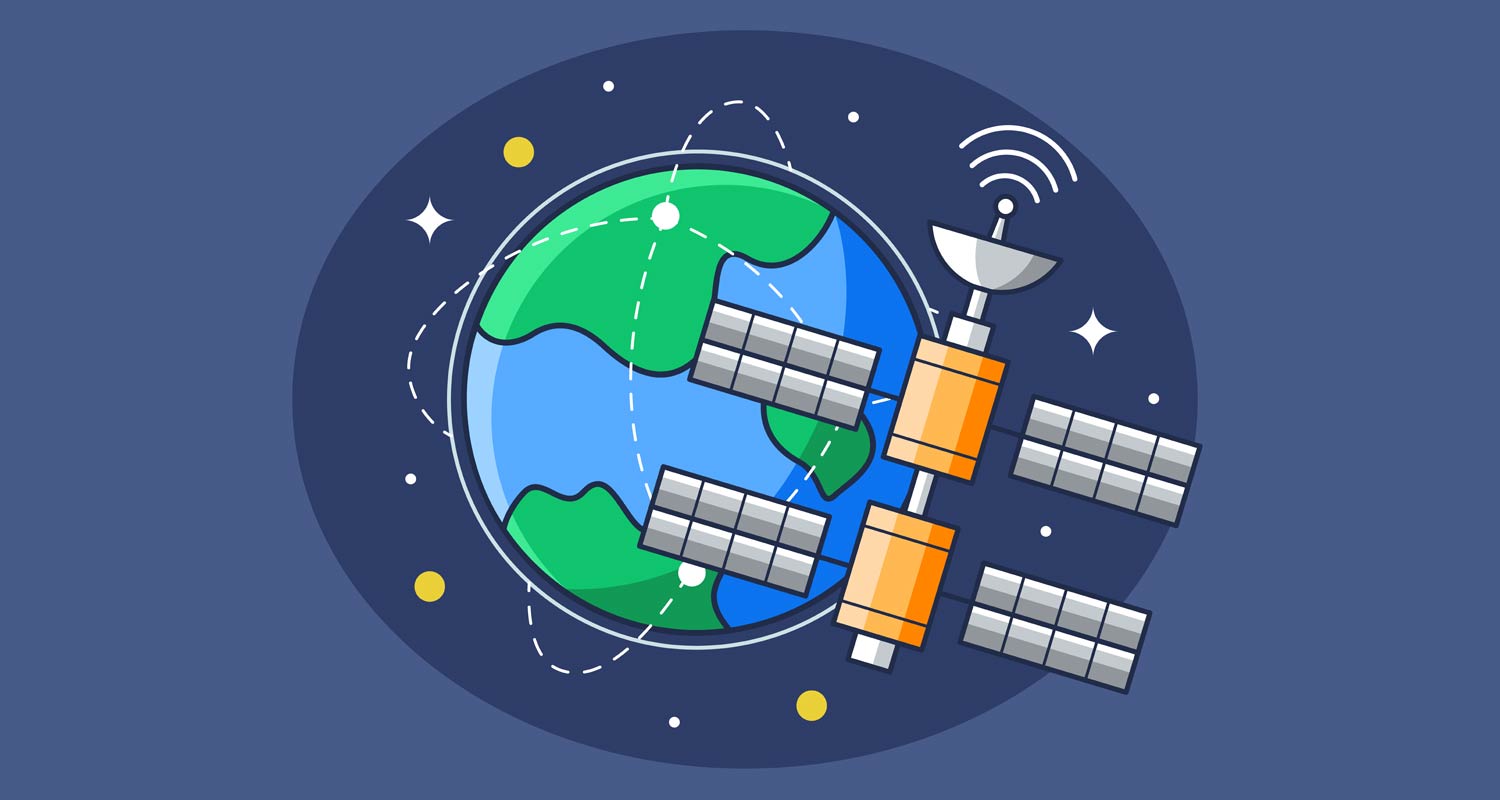
Another factor bringing direct-to-device closer to the mainstream is the technology’s growing ability to handle higher-bandwidth services.
The first commercially available direct-to-device service was introduced by Apple in 2022, in partnership with satellite operator Globalstar. Dubbed “satellite emergency SOS”, the feature allowed iPhone 14 users in areas with no terrestrial coverage to send short messages to emergency services. Higher-bandwidth uses such as voice calls or web browsing were not included.
In March 2025, MTN claimed Africa’s first successful test of a direct-to-device phone call. The test, conducted in Vryburg in partnership with Lynk Global, showed that use cases like voice – with higher bandwidth and lower latency requirements than SMS – were possible over a LEO satellite connection.
In March 2026, Vodafone and Satellite Connect Europe expanded these capabilities further, successfully executing a video call over a direct-to-device connection using a standard smartphone.
With the battery capacity of standard smartphones increasing without the devices getting physically larger, regulators easing restrictions on the power output of satellite signals, and higher-capacity use cases like video calls now enabled, the idea of user devices connecting to cell towers in space rather than to terrestrial infrastructure is becoming feasible.
Outdoors
There is one big problem, however: it’s not a solution that works well indoors, inside a structure with walls and a roof. Apple’s emergency SOS via Globalstar explicitly requires the user to step outside and point the phone at the sky, with an on-screen guide showing where the satellite is. T-Mobile’s Starlink direct-to-cell text service in the US works outdoors and in vehicles with a clear view of the sky, but not reliably inside buildings. The MTN Vryburg voice call and the Vodafone–AST SpaceMobile video call were both outdoor demonstrations.
However, Given the global scale at which LEO broadband service providers operate and the declining cost of deploying satellites, it is not hard to imagine a future in which their economies of scale make it cheaper for them to offer mobile services than terrestrial operators.
Read: Karoo collision: Starlink vs science in South African skies
At present, mobile operators and LEO satellite companies often partner with each other. It is a sound go-to-market strategy: the operators get to extend their networks into areas where building terrestrial infrastructure is infeasible, and the LEO satellite companies get access to consumers without having to invest in customer-facing infrastructure or shoulder heavy regulatory compliance burdens.
Direct-to-device, however, could mean direct competition, especially if LEO satellite companies start bidding for their own mobile spectrum – a scenario that would break the terrestrial-only assumption underpinning Icasa’s spectrum framework.
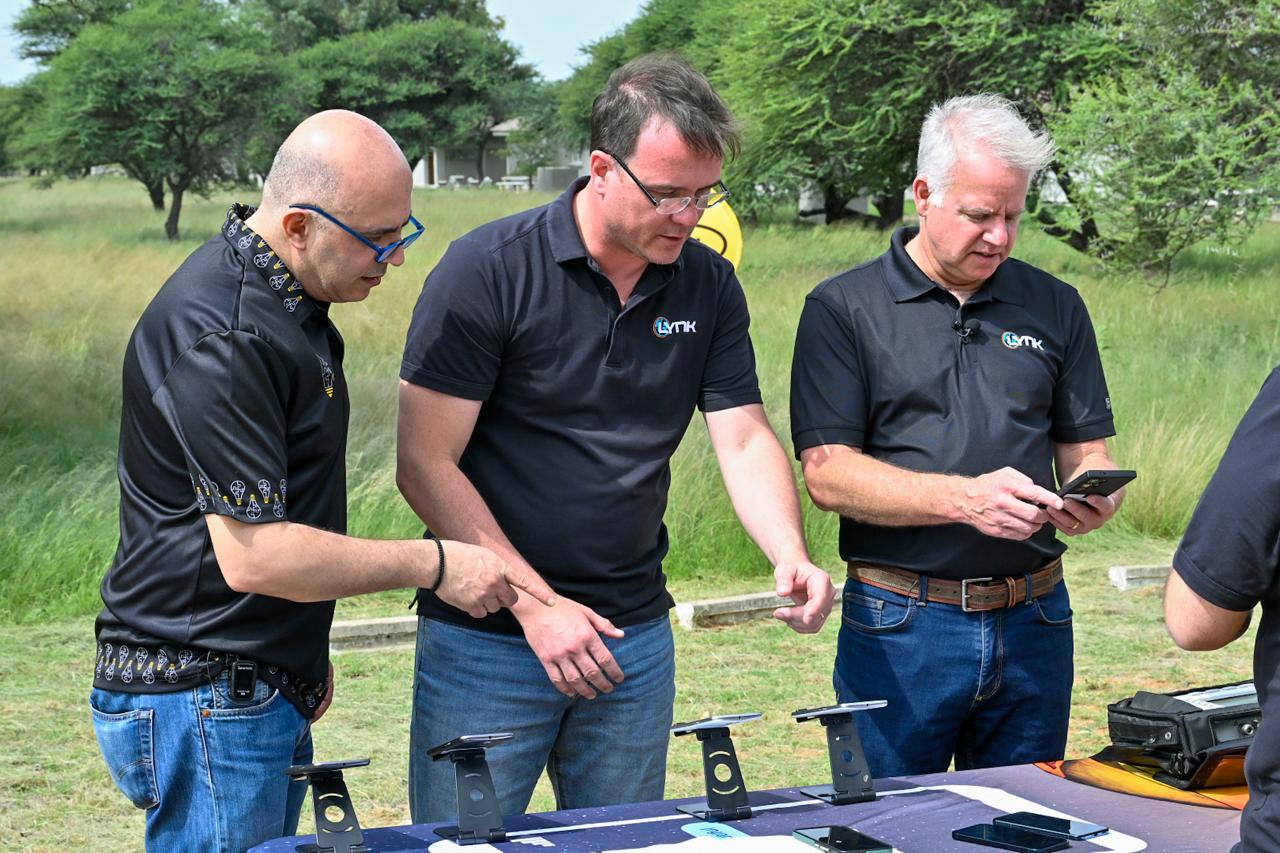
As far back as 2024, MTN Group CEO Ralph Mupita acknowledged that direct-to-device technology could pit mobile and satellite operators against each other. He said then that MTN was positioning itself to mitigate against that threat.
South Africa’s mobile operators, through their industry lobby group the Association of Comms & Technology, have expressed an openness to having satellite players enter the local market on their own instead of partnering with them. This is only on condition that the satellite operators are subject to the same regulatory requirements around data privacy, data transport, localisation and access to spectrum.
But serving consumers directly comes with regulatory overheads that satellite operators may not be ready to contend with. – © 2026 NewsCentral Media
- The author, Nkosinathi Ndlovu, is a senior journalist at TechCentral
Get breaking news from TechCentral on WhatsApp. Sign up here.