
Cadre deployment isn’t necessarily the problem – having political affiliation as the only criterion when making appointments is
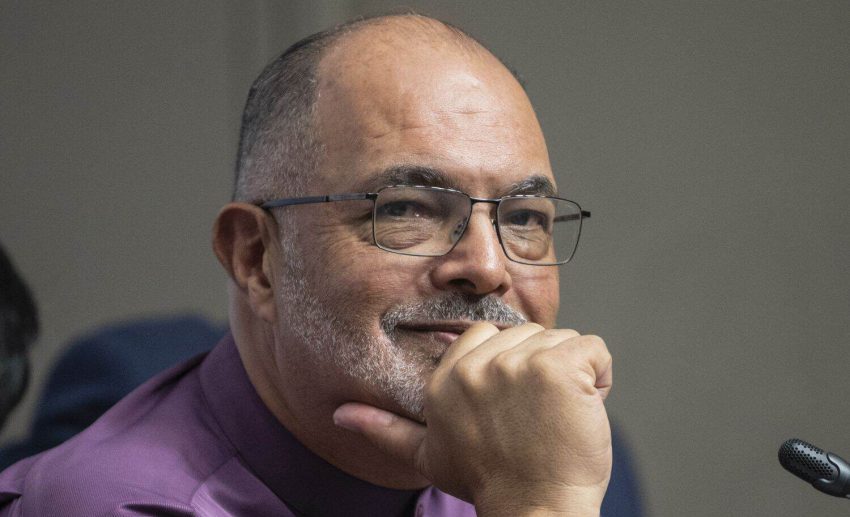
The South African Revenue Service (Sars) is now a resilient institution that has been healed internally and has regained the trust of taxpayers that it lost during the state capture years.
Public trust in the institution was at 48% in 2019. It is now up to 75%, service levels are above 90% and the voluntary compliance index is up by five percentage points, says outgoing Sars Commissioner Edward Kieswetter.
Sars achieved tax buoyancy ratio of 1.5 in this period (percentage change in tax revenue in relation to percentage change in GDP; a coefficient greater than 1 means tax revenues grew faster than the economy, indicating tax system efficiency).
This translates into tax revenue of R800 billion, Kieswetter said during an ‘exit interview’ in an Espresso Briefs podcast last week, hosted by law firm Nortons Inc.
“Had we grown at unity buoyancy [a tax buoyancy of 1] we would have had to borrow almost R900 billion. It would have meant an additional R80 billion of debt service cost. That is the compounding effect of a well-functioning revenue authority,” he explained.
Political motivations
When prompted about the lack of performance in other government institutions, Kieswetter noted that appointments in the public sector are inspired by political motives.
“I am not saying this is good or bad. Around the world political parties choose their own [labels]. In SA we have given it a bad name. We call it cadre deployment.”
Kieswetter says the problem is not deploying people from your own political organisation. The problem is often making that the only criteria for appointments.
What is required in leadership (character, requirements for the job, work ethics and incorruptibility) does not come into play. Very often people end up in positions that they are just not prepared for, even if they are good people and not corrupt.
Fixing leadership
“That is the first thing we have to fix. We must be clear about the kind of leaders, attributes and skills every department needs. That requires an intentional plan of action to grow these leaders. This then becomes a virtuous cycle where success breeds success.”
He also reflected on the governance environment in which public service organisations have to operate in, saying it is compliance-driven, not business-driven.
The culture in the public sector often fails to breed excellence or success. It nurtures a culture of compliance; a culture where you do as little as possible to stay out of trouble.
Kieswetter took over when Sars was in big trouble. More than 2 000 staff members had left, people were marginalised, and some high-ranking executives were severely compromised. The Nugent Commission had just completed its inquiry into the tax administration and governance at Sars.
Judge Robert Nugent, in his report, said the failure of governance at Sars was made possible by weaknesses in the governing legislation for the revenue authority, which did not entrench governance structures in the organisation.
Illicit economy
The years of state capture not only hollowed out the likes of Sars, but many of the country’s law enforcement agencies too, opening the door for an unlawful economy to grow.
“The illicit economy is highly organised. It acts, performs and behaves like a business, except that it acts outside of the law,” says Kieswetter.
“It is a deeply embedded systemic phenomena. Government has responded to it in a transactional and functional way, not in a systemic way.”
Everyone has been operating in their own narrow silos. Government has now accepted a new approach with the design of an illicit economy disruption programme. To create a national agenda, the programme is located in The Presidency.
The first focus is the high-risk Lebombo border post and the wider border between SA and Mozambique.
“Over the next three years we hope to drive this border reform at Lebombo and use it as a proof of concept for how our borders should be modernised,” says Kieswetter.
He adds that it will then be scaled up across all borders and different modalities, whether land, sea or air. The idea is to make illicit trade in alcohol, tobacco, clothing and fuel difficult by cutting off the flow across borders and to contain the problem in SA where it can by systematically dismantled.
The tax gap
A remaining challenge for Sars is the R500 billion tax gap – which Kieswetter says is a “moving target”. The majority (R200 billion) is caused by risks and abuse posed by the value-added tax (VAT) system.
Leakage from customs and excise fraud and trade-based money laundering makes up a large chuck of the gap.
He believes the answer lies in the modernisation of the entire system to “disintermediate” the need for people to disclose information; Sars must be integrated into the natural systems of businesses. Being connected to every point of sale is the ultimate cure.
“We think it is achievable,” says Kieswetter.
Thursday, 30 April, will be his last day as commissioner. On 1 May Johnstone Makhubu takes over the reins.
This article was republished from Moneyweb. Read the original here.