
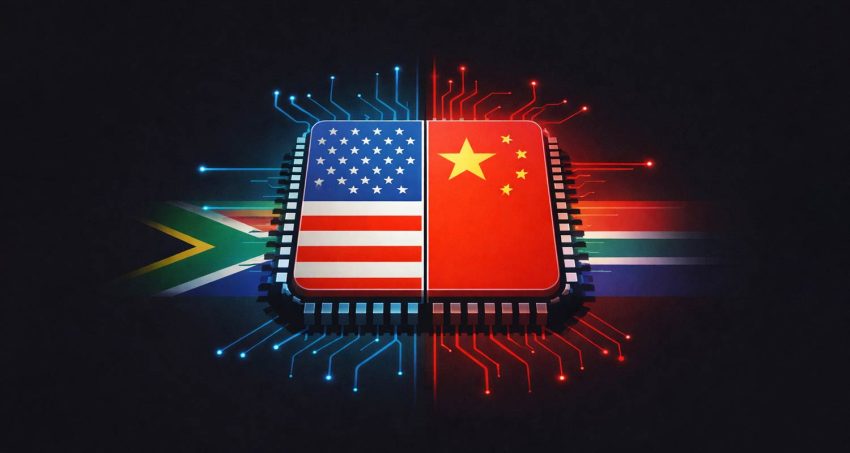
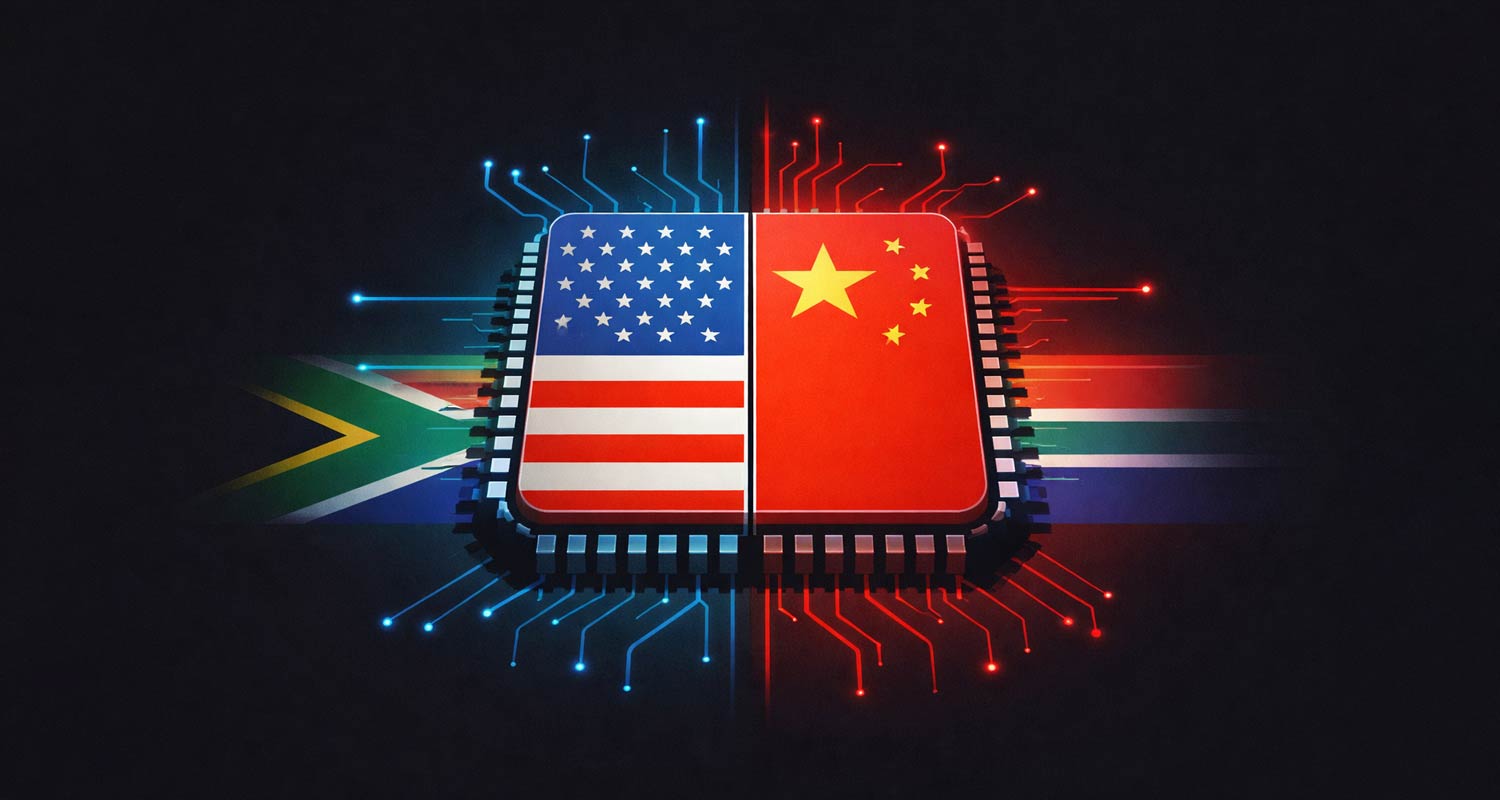
South Africa’s draft AI policy document – gazetted last week by the department of communications & digital technologies – contains a candid acknowledgement that the country’s reliance on US and Chinese hardware poses a strategic vulnerability that the intensifying rivalry between the two powers makes increasingly difficult to manage.
“Reliance on foreign infrastructure compromises the security of sensitive South African data. Therefore, there is a need to invest in local infrastructure and related data sovereignty measures to safeguard the national interest … and create plans to reduce the country’s current hardware dependence on the US and China,” said the document.
One way to reduce data sovereignty risk is to create more local infrastructure to ensure that sensitive data is not stored on foreign servers. In his budget speech in February, finance minister Enoch Godongwana for the first time placed data centre infrastructure on the same footing as electricity, ports and transport networks.
This policy shift is partly aimed at attracting more investment. But even if it manages to ensure higher levels of data sovereignty, the hardware used in those data centres must come from somewhere.
The hardware concern sits within a broader and accelerating phenomenon: the bifurcation of global technology standards along geopolitical lines. What began as a trade dispute between the US and China over semiconductors has evolved into something more structurally significant – the gradual emergence of parallel technology ecosystems, one anchored in the US and its allies and another centred on China.
Implications
The implications run deeper than chip supply. They extend to networking equipment, cloud infrastructure, AI training hardware and, increasingly, to the software and model layers built on top of them. Huawei Technologies’ development of its own AI silicon in response to US export controls, and the emergence of domestically developed Chinese large language models running on that silicon, is the most visible expression of a stack that is actively diverging.
For countries in the middle – and South Africa sits squarely in that category – the risk is being forced to choose, or of inadvertently locking into one ecosystem before the consequences of that choice are fully understood.
Read: South Africa’s draft AI policy is a bureaucrat’s dream
In March, the US banned the importation and sale of new foreign-made internet routers over national security concerns, spreading the geopolitical divide from the infrastructure to the consumer hardware market. Other sectors are also at risk.
At Mobile World Congress in Spain in March, GSMA deputy president and CEO of MTN Group Ralph Mupita warned that the mobile industry faced a bifurcation of technology standards as the industry moves towards 6G connectivity. According to Mupita, the resulting split in supply chains and the possible shrinking of global economies of scale could put smaller economies like those in Africa at risk of falling further behind in digital infrastructure and access to connectivity.
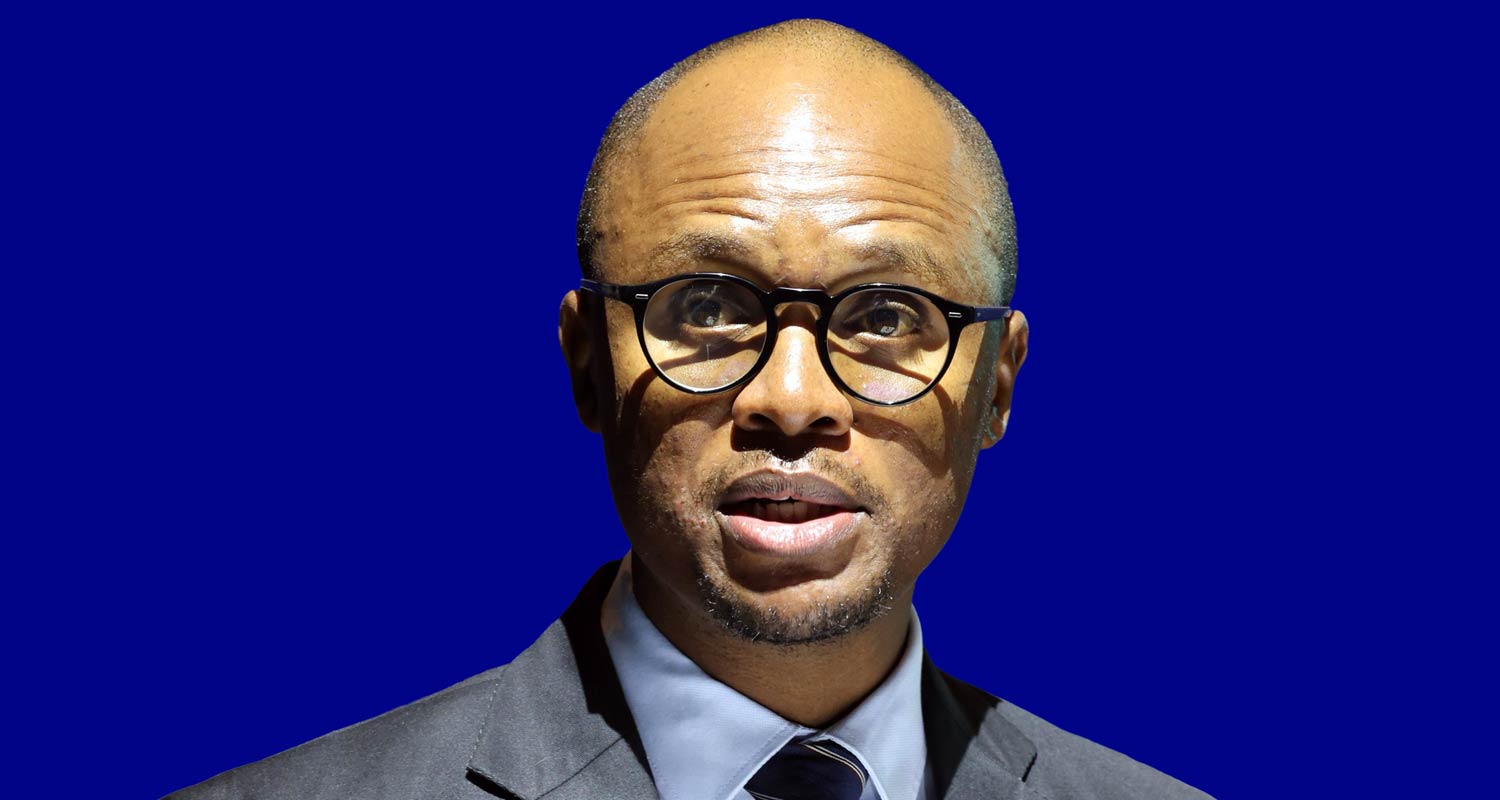
“A huge area of debate among the GSMA board members is the concept of digital sovereignty and whether it is a paradox or oxymoron in a world that today is increasingly looking like it’s trending towards de-globalisation and moving towards one where you may have bifurcated standards for 6G,” said Mupita.
For South African enterprises and public institutions currently procuring AI infrastructure, the bifurcation question presents a quandary. Decisions made now about which cloud platforms to standardise on, which networking vendors to deploy and which AI model providers to integrate with carry long-term switching costs. If global standards continue to fragment, those decisions will increasingly carry geopolitical dimensions that procurement policy is not currently equipped to navigate.
Speaking to Newzroom Afrika on Tuesday, communications minister Solly Malatsi said people in all sectors are affected by AI, adding that cooperation between government, business and the general public is important to ensure South Africa develops a sound AI policy.
“Every sector has had a unique impact and response to AI, and we want to tap into the lessons that have been evident in those areas and aggregate those into a policy that can be fair and practical and that gives society a solid foundation. We are dealing with a technology that is rapidly developing and, if truth be told, we are a little late in the journey of responding to it,” said Malatsi.
The draft AI policy is open for public comment until 10 June. – © 2026 NewsCentral Media
Get breaking news from TechCentral on WhatsApp. Sign up here.